
The 8 Best Data Integration Tools in 2026

Key facts8 tools compared: Airbyte, Fivetran, Estuary Flow, Hevo Data, Matillion, dlt (dltHub), Stitch…
- 8 tools compared: Airbyte, Fivetran, Estuary Flow, Hevo Data, Matillion, dlt (dltHub), Stitch, Meltano
- Airbyte (best for: Most teams, broad connector needs): Free OSS / Cloud from ~$10/mo
- Fivetran (best for: Hands-off, non-engineering teams): Free tier / usage-based MAR
- Estuary Flow (best for: Real-time and CDC pipelines): Free 10GB / $0.50 per GB
- Hevo Data (best for: Mid-market, predictable budgets): Free / from $239/mo
Every data team I've worked with hits the same wall. The dashboards look great until someone asks why revenue in the warehouse doesn't match Stripe, and you realize three different pipelines are syncing the same object on three different schedules. Data integration is the unglamorous plumbing that decides whether your analytics are trustworthy or fiction.
The market has gotten crowded and confusing. You've got fully managed ELT platforms that charge by the row, open-source libraries you run yourself for free, and real-time streaming engines that move change events in milliseconds. The pricing models barely compare to each other, which is exactly how vendors like it.
I compared these tools on connector breadth, deployment options, and pricing across a typical warehouse stack. If you want the short answer: Airbyte is the best all-around pick for most teams because of its connector breadth and flexible deployment. But the right choice depends heavily on whether you have engineers, how fresh your data needs to be, and how much you hate surprise invoices. Here's the breakdown.
Quick comparison
| Tool | Best for | Price | Standout |
|---|---|---|---|
| Airbyte | Most teams, broad connector needs | Free OSS / Cloud from ~$10/mo | 600+ connectors, OSS + managed |
| Fivetran | Hands-off, non-engineering teams | Free tier / usage-based MAR | Zero-maintenance, 700+ connectors |
| Estuary Flow | Real-time and CDC pipelines | Free 10GB / $0.50 per GB | Sub-second streaming + batch |
| Hevo Data | Mid-market, predictable budgets | Free / from $239/mo | Clean UI, 150+ connectors |
| Matillion | Enterprise warehouse transforms | Credit-based, from ~$1,000/mo | In-warehouse ETL + AI agents |
| dlt (dltHub) | Python engineers, custom sources | Free (open source) | Pipelines as Python code |
| Stitch | Simple SaaS-to-warehouse sync | From $100/mo | Dead-simple setup |
| Meltano | Teams who treat pipelines as code | Free (open source) | Git-native, CI/CD friendly |

Airbyte: the default pick for most teams
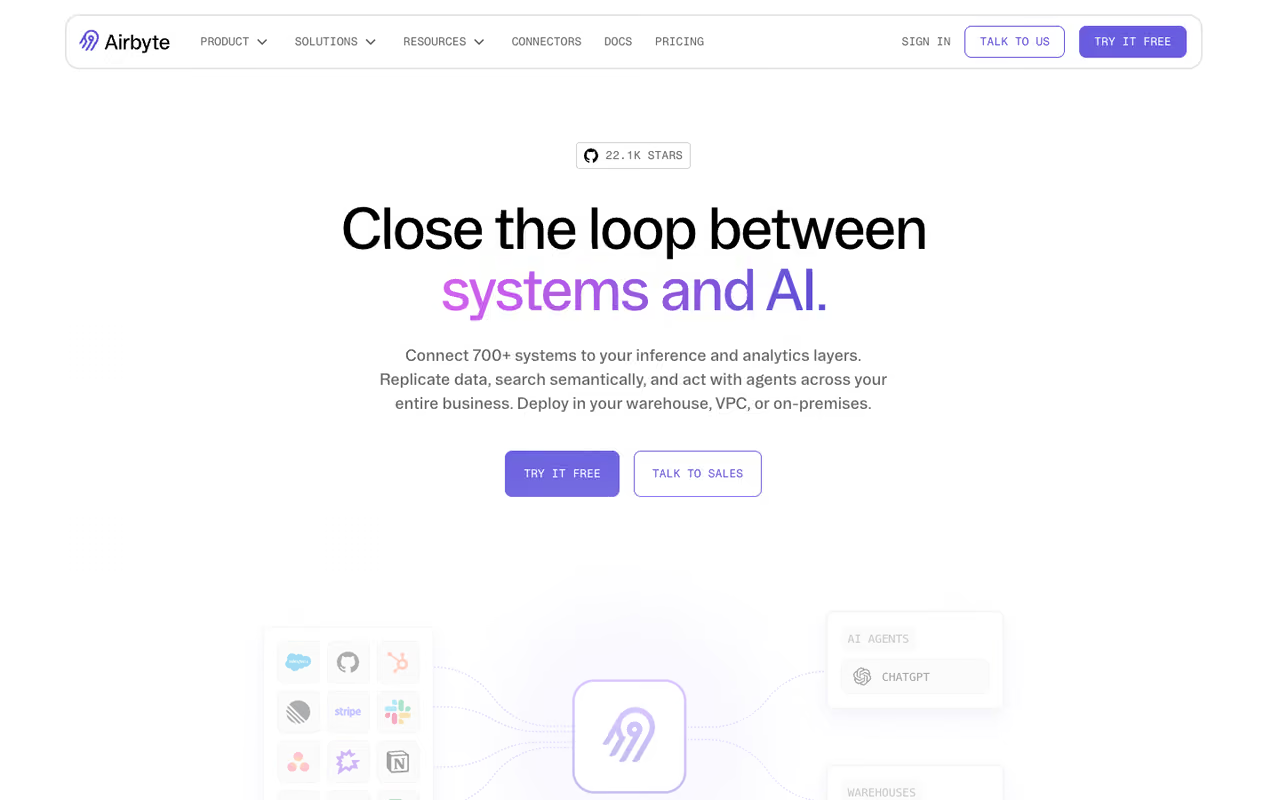
Airbyte is where I send most people first. It's an ELT platform with over 600 connectors, an AI-assisted connector builder for sources nobody else supports, and the rare ability to run it either as a managed cloud service or self-hosted on your own infrastructure. That flexibility matters when your data governance team has opinions about where customer records live.
The default for teams that want broad coverage without locking into one vendor's cloud, with over 600 connectors and a standout connector builder. Self-hosting is no longer a weekend project, so pay for Cloud if you lack Kubernetes skills.
The open-source Core edition is genuinely free if you're willing to run it, and per Airbyte's own numbers it's now used by 18% of the Fortune 500. That adoption tells you the connectors hold up in production.
On pricing, the Cloud Standard plan starts around $10/month with volume-based billing, the Plus tier opens at $500/month with 15-minute syncs, and Pro and Enterprise are custom. The connector builder is the real differentiator. When a SaaS API isn't in the catalog, you describe it and Airbyte scaffolds the connector instead of leaving you stranded.
The catch: self-hosting Airbyte is no longer a weekend project. Production OSS deployments now run on Kubernetes alongside Postgres, Redis, and Temporal. If you don't have someone comfortable with that stack, the "free" version costs real engineering hours, and you should just pay for Cloud.

Fivetran: set it and forget it
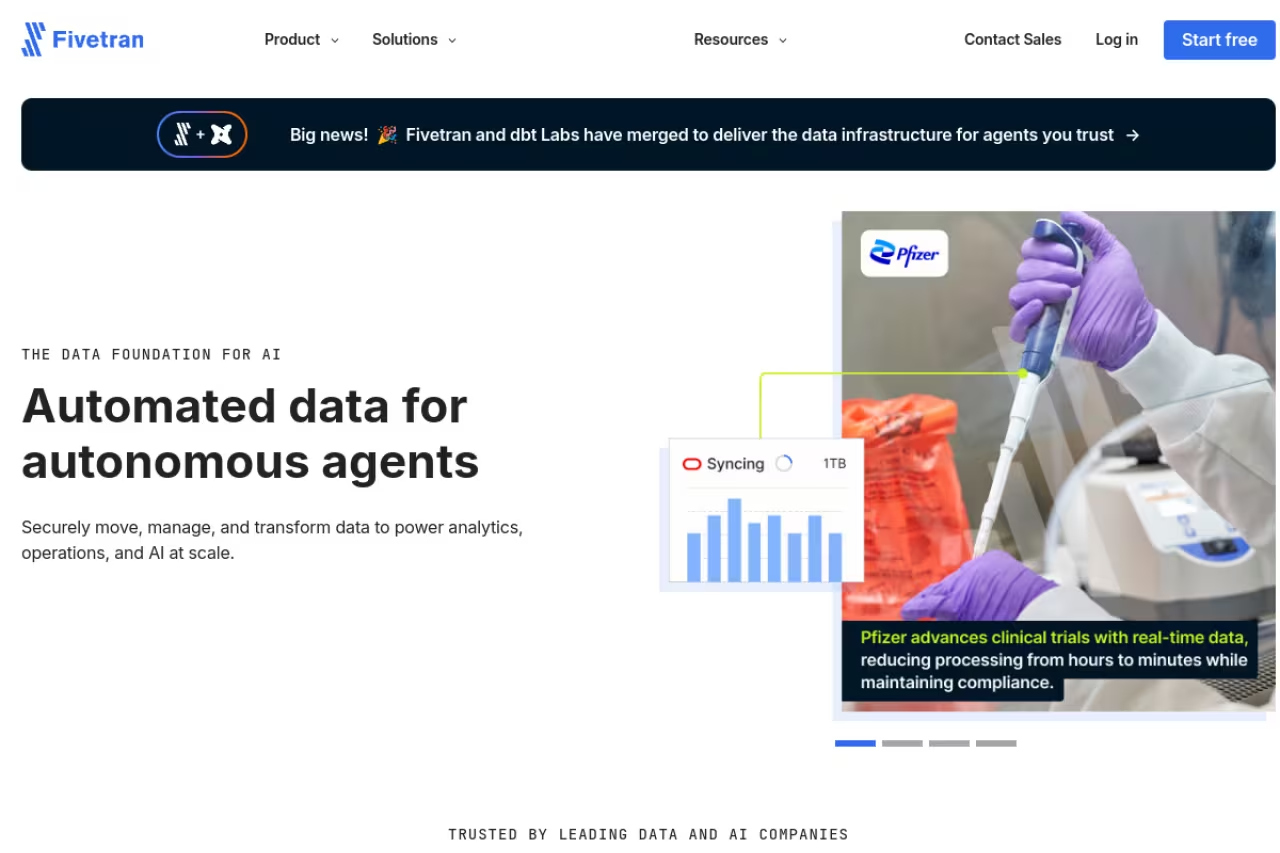
Fivetran is the tool I recommend when nobody on the team wants to think about pipelines ever again. It's fully managed, handles schema drift automatically, and ships over 700 connectors plus 200+ activation destinations for pushing warehouse data back into business tools. You connect a source, pick a destination, and it just runs.
This is the pick for analytics teams without dedicated data engineers, or for companies where the cost of a broken pipeline far outweighs the subscription. The reliability is the product. I've rarely had a Fivetran sync silently fail, which is more than I can say for some self-hosted setups.
Fivetran is the set-it-and-forget-it choice for analytics teams without data engineers, or where a broken pipeline costs more than the subscription. Reliability is the product, but MAR pricing is hard to forecast and can spike on chatty sources.
Pricing runs on Monthly Active Rows (MAR), measuring inserts, updates, and deletes that land in your destination. Initial bulk loads and unchanged rows during re-syncs don't count, and per the Fivetran pricing page each connection follows its own cost curve with rates dropping as volume climbs. There's a free tier, and annual commitments save up to 22%.
The catch: MAR pricing is genuinely hard to forecast. A single chatty source that updates rows constantly can blow up your bill in a way the dashboard doesn't warn you about until the invoice. Budget-conscious teams routinely get burned, which is the whole reason "Fivetran alternatives" is one of the most-searched phrases in this category.

Estuary Flow: when data needs to be fresh now
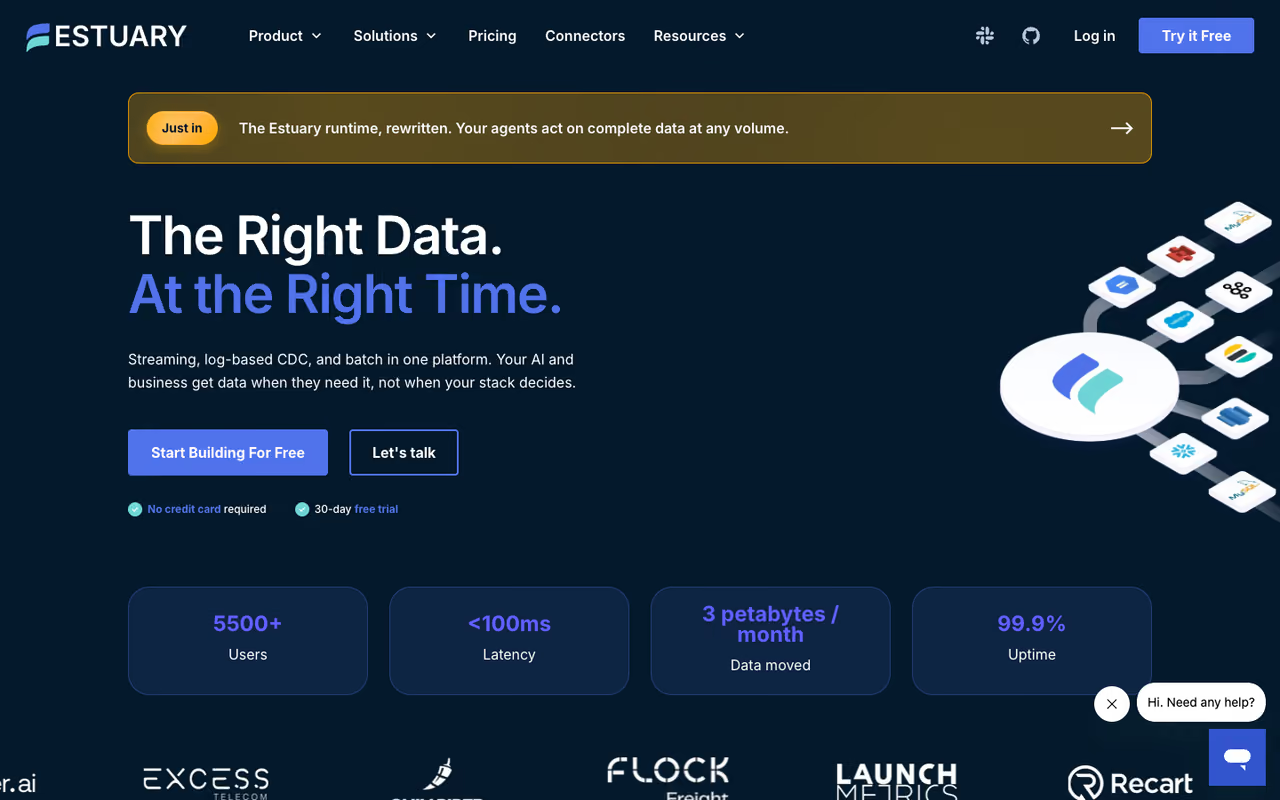
Estuary Flow solves a problem the batch tools fudge. If your use case needs data that's seconds old instead of an hour old, Estuary is built for it. The platform unifies real-time Change Data Capture and scheduled batch in one system, with what it calls "millisecond latency or batch" depending on what each pipeline needs.
This is the right tool for operational analytics, fraud detection, live inventory, or anything where stale data is a real business problem. It's also a strong CDC option for replicating from production databases without hammering them. The 200+ connectors cover the usual warehouse and SaaS suspects.
The right tool for operational analytics, fraud detection and anything where stale data hurts, and a strong CDC option. Pricing is clear, but the connector catalog is smaller and hourly batch needs make it more machine than required.
Pricing is refreshingly clear for this space. The free tier gives you 10GB/month with up to 2 connectors. The Cloud plan runs $0.50 per GB of change data moved plus a per-connector monthly fee, and there's a 30-day trial. For a real-time platform, that's a lot more transparent than guessing at MAR.
Where it falls short: the connector catalog is smaller than Airbyte's or Fivetran's, so check that your specific sources are supported before committing. And real-time architecture adds conceptual overhead. If hourly batch syncs are fine for your needs, Estuary is more machine than you require.
If you're building an internal data team and want to skip the months of trial and error I went through, Dupple X curates the tools and workflows that actually hold up in production.

Hevo Data: the predictable mid-market choice
Hevo Data sits in a sweet spot for mid-market teams that want a clean managed experience without enterprise pricing chaos. It offers 150+ connectors, native dbt integration, and a UI that non-engineers can actually navigate. Setup is fast and the monitoring is decent out of the box.
Hevo Data is the mid-market choice for teams that have outgrown free tools but aren't ready for Fivetran-scale bills. It's fast to set up with fairly predictable pricing, but the catalog is about a quarter the size of Airbyte's.
The pricing is event-based and reasonably predictable: a free tier up to 1M events/month, a Starter plan at $239/month annually for 5M to 50M events, and a Professional plan at $679/month annually with unlimited users.
The catch: event-based pricing can still surprise you if your volumes spike, and the connector library, while solid, is roughly a quarter the size of Airbyte's. Niche sources may not be covered, and you can't extend the catalog yourself the way Airbyte's builder lets you.

Matillion: heavy-duty warehouse transformation
Matillion is a different animal from the ingestion-first tools above. Its Data Productivity Cloud pushes transformations down into your warehouse and now layers AI agents (branded Maia) that build and validate pipelines. It's aimed at enterprises with serious transformation logic, not just teams moving rows from A to B.
A heavy-duty pick for large data teams on Snowflake, BigQuery or Databricks with complex, governed transformation workflows. Credit-based pricing is steep and warehouse compute adds more, so skip it if you're under 20 people.
The visual pipeline builder is powerful, and the agentic features are more than a demo gimmick if you're running hundreds of jobs.
Pricing is credit-based and steep. Per Integrate.io's analysis, plans start around $1,000/month, with orchestration credits near $2 and transformation credits around $3.50. Enterprise Scale tiers reach into six figures annually.
Where it falls short: because Matillion pushes work to your warehouse, every run generates separate compute charges from your cloud provider. Total cost of ownership is hard to predict, and it's overkill for small teams. If you're under 20 people, look elsewhere.
dlt: data integration as Python code
dlt (data load tool) is the one I reach for when a source is weird and I want full control. It's an open-source Python library you install with pip install dlt, and it handles the tedious parts: schema inference, normalization, and incremental loading. No backend, no container, no UI to log into. It drops into a notebook, an Airflow DAG, or a Lambda function.
Python-fluent engineers get the most flexibility here, especially for weird sources or REST APIs no managed connector covers. It's a library, not a platform, with no UI or managed scheduling, so it's the least hand-holdy option.
By early 2026 dlt reported 81,000 pipelines in its community, and notably agents now build roughly 91% of new ones, which makes it a natural fit if you're using AI coding assistants. For that workflow, see my guide on the best AI for coding.
The catch: dlt is a library, not a platform. There's no point-and-click setup, no managed scheduling, no dashboard unless you add dltHub Pro or wire up your own orchestration. If you don't write Python, this isn't your tool. It's the most flexible option here and the least hand-holdy.

Stitch: simple SaaS-to-warehouse sync
Stitch is the no-frills option for getting SaaS data into a warehouse fast. It's built on the open Singer standard, offers 130+ connectors, and the setup genuinely takes minutes. Predictable row-based pricing makes budgeting easy, which is a relief after wrestling with MAR.
Stitch is the no-frills pick for small teams with straightforward needs who value simplicity over breadth, with predictable row-based pricing. Product momentum has slowed, so I wouldn't bet a growing data strategy on it.
The Standard plan is $100/month for 5 million rows, 10 source connectors, and one destination, with Advanced and Premium tiers for higher volumes.
Where it falls short: Stitch was acquired by Talend (now Qlik), and product momentum has clearly slowed. Connector updates ship less often than competitors, and the catalog hasn't kept pace. It's a fine pick for stable, common sources, but I wouldn't bet a growing data strategy on it.

Meltano: pipelines that live in Git
Meltano treats data integration the way developers treat software. It's an open-source ELT framework built around the Singer ecosystem, designed for version control, CI/CD, and testing. Your pipelines become code in a repo, reviewable and reproducible.
Meltano suits engineering-led teams that want their data stack under the same rigor as application code, with pipelines living in Git. It's free in license but costs engineering time, and the UI and enterprise features are thin.
If you already run everything through pull requests, Meltano fits naturally.
The catch: it demands real technical expertise and manual infrastructure management. The UI is limited and enterprise features are thin compared to managed platforms. Meltano is free in license but costs you in engineering time, the same trade-off as self-hosted Airbyte.
How to choose
Skip the feature checklists and answer three questions in order.
First, do you have data engineers? If no, go managed: Fivetran for hands-off reliability, or Hevo for a gentler bill. If yes, the open-source options (Airbyte OSS, dlt, Meltano) unlock real savings.
Second, how fresh does the data need to be? If hourly batch is fine, almost any tool works. If you need seconds, Estuary Flow is purpose-built and the batch tools will frustrate you.
Third, how predictable is your budget? Row and event pricing (Stitch, Hevo) is easy to forecast. Consumption pricing (Fivetran MAR, Matillion credits) scales with usage and can surprise you. Open source is free in license but not in time.
For most teams, Airbyte is the safest default because it spans the managed-versus-self-hosted divide. You can start on Cloud and move to OSS later without rebuilding everything. Once your pipelines are flowing, the next question is usually which analytics and AI layer sits on top, and Dupple X is where I'd point you next. You can also browse our top tools directory for adjacent picks.
FAQ
What is the difference between ETL and ELT?
ETL (Extract, Transform, Load) transforms data before loading it into the warehouse, using an external engine. ELT (Extract, Load, Transform) loads raw data first and transforms it inside the warehouse. In 2026 ELT dominates because cloud warehouses like Snowflake and BigQuery handle transformation at scale far better than external tools. Most modern integration platforms, including Airbyte and Fivetran, are ELT-first.
What is the best free data integration tool?
For engineers, dlt and Airbyte's open-source Core are the strongest free options, with Meltano close behind for Git-native teams. For non-engineers who want a managed free tier, Hevo (up to 1M events/month) and Estuary Flow (10GB/month) are the most usable. "Free" open source still costs infrastructure and engineering time, so factor that in.
Is Airbyte better than Fivetran?
It depends on your team. Airbyte wins on connector count (600+), deployment flexibility, and cost control, especially if you self-host. Fivetran wins on zero-maintenance reliability and is easier for teams without engineers. If predictable hands-off operation matters most, choose Fivetran. If flexibility and budget control matter more, choose Airbyte.
How much do data integration tools cost?
It ranges enormously. Open-source tools (dlt, Meltano, Airbyte OSS) are free in license but cost infrastructure and time. Mid-market managed tools like Hevo and Stitch run $100 to $700/month. Enterprise consumption-based platforms like Fivetran and Matillion start around $1,000/month and scale into six figures annually depending on data volume.
Which data integration tool is best for real-time data?
Estuary Flow is the strongest dedicated real-time option, built around Change Data Capture with sub-second latency. Airbyte and Fivetran offer fast batch syncs (down to 15 minutes on paid tiers) but aren't true streaming. If your use case genuinely needs seconds-fresh data, choose a CDC-native platform like Estuary rather than forcing a batch tool to run frequently.
Do I need a data integration tool if I have a small team?
If you're pulling from more than two or three sources, yes. Hand-coding API pulls and maintaining them quickly becomes a part-time job. For small teams, start with a free tier (Hevo, Estuary, or Airbyte Cloud Standard) and upgrade only when volume demands it. The time saved on maintenance almost always justifies the cost.
Related guides
Some offers on this page may be paid placements or contain affiliate links.
