
The Best Legal Practice Management Software in 2026

Key facts7 tools compared: Clio, MyCase, Smokeball, PracticePanther, CARET Legal, Rocket Matter…
- 7 tools compared: Clio, MyCase, Smokeball, PracticePanther, CARET Legal, Rocket Matter, Filevine
- Clio (best for: The reliable all-around default): From $49
- MyCase (best for: Best value with AI built in): From $50
- Smokeball (best for: Firms that under-bill their time): From $49
- PracticePanther (best for: Billing-led solos and small firms): From $49
Most law firms don't lose money on bad lawyering. They lose it on time that never got billed, deadlines that slipped, and trust accounting done in a spreadsheet that one audit could blow apart. Practice management software exists to plug those leaks, and the category has gotten crowded enough that picking the wrong one costs you a painful migration a year later.
I compared the demos, the pricing pages, and the support docs of the major platforms, and looked at what people who run small firms on them report. The short version: if you want the safe, well-supported default, Clio is still the one to beat. It has the deepest integration library and the most mature feature set. But it's not the cheapest, and a few competitors do specific jobs better, especially automatic time capture and personal-injury workflows.
This guide is for solo attorneys, small and mid-size firms, and operations managers who want a real recommendation instead of a feature checklist. I'll tell you what each tool is good at, what it actually costs, and where it falls short.
Quick comparison
| Tool | Best for | Price (per user/mo, billed annually) | Standout |
|---|---|---|---|
| Clio | The reliable all-around default | From $49 | 250+ integrations, mature AI add-on |
| MyCase | Best value with AI built in | From $50 | 8am IQ assistant on Pro tier |
| Smokeball | Firms that under-bill their time | From $49 | AutoTime passive time capture |
| PracticePanther | Billing-led solos and small firms | From $49 | Fast setup, strong payments |
| CARET Legal | Firms that want built-in accounting | From $59 | Native back-office accounting |
| Rocket Matter | Billing-heavy small firms | From $49 | LEDES billing, batch invoicing |
| Filevine | Litigation and personal injury | Custom (~$100-150) | Deadline chains, deep customization |

Clio: the default that's hard to argue against
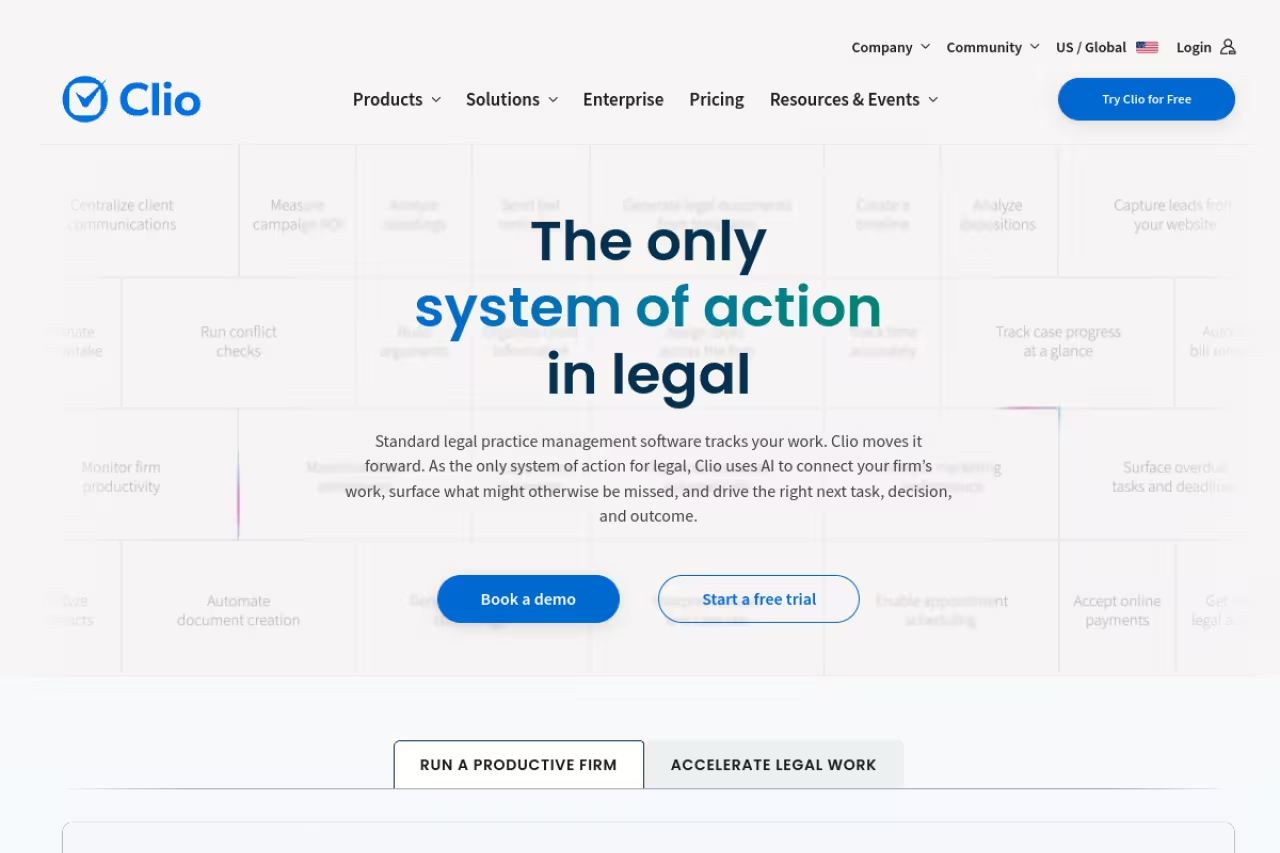
Clio is the platform most consultants recommend first, and after digging in, I understand why. It covers matter management, time tracking, billing, document management, client intake, and payments in one place, and it connects to more outside tools than anyone else. Clio reports 150,000+ users and 250+ integrations, which matters more than it sounds: your accounting software, e-signature provider, and court e-filing tool probably already plug in.
Who it's best for: firms that want one system to run on for years and don't want to gamble on a smaller vendor. Solo through mid-size.
The safe default for solo through mid-size firms that want one system for years and the widest integration ecosystem (250+). Most pricing sits behind sales calls, and stacking a working plan with the roughly $39/user/month AI add-on gets expensive.
EasyStart starts at $49/user/month billed annually. Essentials, Advanced, and Expand sit above it, and Clio moved most pricing behind a "contact sales" wall, so expect the working plans to land in the $89 to $149 range once you need intake and automation. The AI assistant, now folded into Clio's "Manage AI" (the evolution of Clio Duo), is a separate add-on at roughly $39/user/month. You can confirm current tiers on Clio's pricing page.
The standout: the integration ecosystem and a genuinely useful AI layer that summarizes documents, drafts client messages, and helps with time entries.
The catch: it's not cheap once you stack the working plan plus the AI add-on, and hiding three of four prices behind sales calls is annoying when you're trying to budget. Small solos on a tight margin sometimes find it heavier than they need.
MyCase: the value pick that quietly added strong AI
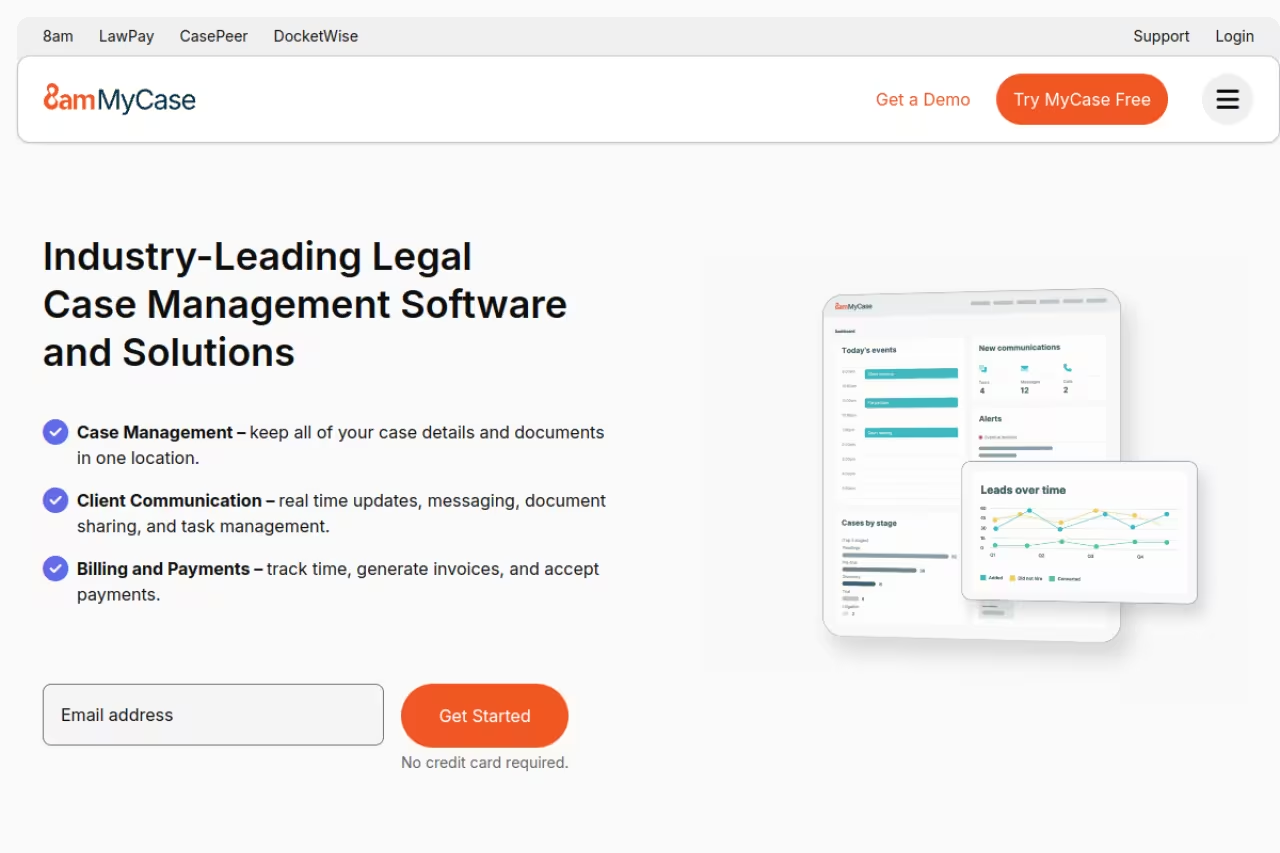
MyCase (owned by AppFolio) has long been the "best dollar-for-dollar" answer in this category, and in 2026 it's more interesting because the AI features are baked into the plan rather than sold as a pricey extra. The "8am IQ" assistant handles writing, document generation, and a case assistant that surfaces matter details on demand.
Who it's best for: solo and small firms that want most of what Clio offers at a friendlier price, plus AI without a separate line item.
The value pick for solo and small firms that want most of what Clio offers at a friendlier price, with AI included on Pro rather than sold on top. Its integration list is shorter than Clio's, so check compatibility first.
straightforward and public, which I appreciate. Basic is $50/user/month, Pro is $100, and Advanced is $130, all billed annually, per MyCase's pricing page. Trust accounting is included at every tier now; full back-office accounting is a $39/month add-on. The AI writing assistant lands on Pro.
The standout: AI document and writing help included on the Pro tier instead of charged on top, plus online payments with next-day deposits.
Where it falls short: the integration list is shorter than Clio's, so if you depend on a niche tool, check compatibility before you commit. Reporting is solid but less granular than enterprise-leaning platforms.

Smokeball: the answer to chronic under-billing
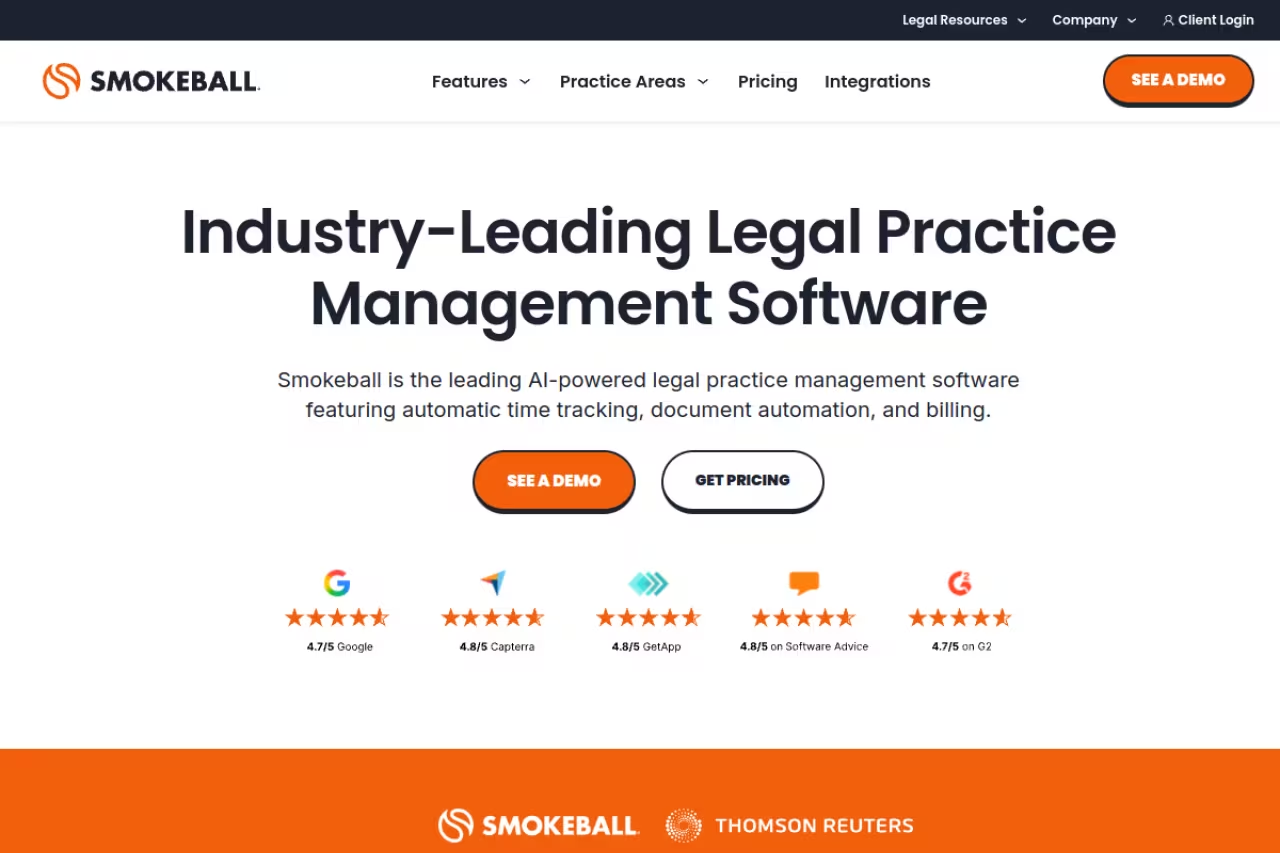
If your firm bleaks billable time, Smokeball is the most direct fix on this list. Its AutoTime feature passively tracks what you do in Word and Outlook (documents opened, emails sent) and turns that activity into draft time entries every night. Smokeball cites an average of 30+ extra minutes of captured billable time per attorney per day, which compounds fast across a team.
Who it's best for: firms where attorneys forget to start timers and write off hours they actually worked. Often a strong fit for small litigation and family-law practices.
The most direct fix for firms where attorneys forget timers and write off hours, thanks to passive AutoTime capture, and often a strong fit for small litigation and family-law practices. The headline feature sits on higher tiers, there is no free trial, and it leans on Microsoft desktop apps.
Bill starts at $49/user/month and Boost is $89/user/month. The two upper tiers, Grow and Prosper+, are quote-based. AutoTime is bundled into Prosper+ and available as an add-on on Grow, so the headline feature lives on the higher tiers.
The standout: automatic, passive time capture that pays for the subscription if you bill hourly.
The catch: no free trial, the best feature sits behind the top plans, and it leans heavily on Microsoft's desktop apps, so a fully cloud or Mac-first workflow loses some of the magic. Pricing transparency past Boost is thin.
If billable-hour leakage is your real problem, it's worth pairing tooling like this with a clear-eyed look at how your team works day to day, the same way teams use Dupple X to cut through tool overload and focus on what moves revenue.

PracticePanther: fast to start, billing done well
PracticePanther (part of Paradigm) is used by attorneys across 170+ countries and earns its reputation on quick setup and strong billing and payments. PantherPayments handles card and eCheck collection inside the platform, and the intake and workflow automation cover the basics most small firms need.
Who it's best for: solos and small firms that want to be running this week, not next quarter, and that care most about getting paid faster.
A quick-start choice for solos and small firms that want to be running this week and get paid faster. Reporting and customization are thinner than Filevine or CARET Legal, so some firms outgrow it.
Solo is $49/user/month, Essential is $69, and Business is $89, all billed annually, per PracticePanther's pricing. Monthly billing adds roughly $10/user across tiers.
The standout: genuinely easy onboarding plus capable billing, payments, and client communication out of the box.
Where it falls short: reporting and customization are thinner than Filevine or CARET Legal, and power users sometimes hit a ceiling as the firm grows. It's a great starter system that some firms outgrow.
CARET Legal: practice management with real accounting inside
CARET Legal (formerly Zola Suite) stands out for building genuine back-office accounting into the platform instead of pushing everything to QuickBooks. You get matter management, client intake, document handling, and an accounting module that handles trust and operating books in one system, which cuts down on reconciliation headaches.
Who it's best for: firms tired of stitching practice management to a separate accounting tool, and mid-size practices that want reporting depth.
Choose it if you are tired of stitching practice management to separate accounting software, with trust and operating books built in. The interface is denser and the learning curve steeper, and the accounting depth is wasted if you already run a bookkeeper.
Core is around $59/user/month, Enterprise around $79, and Elite around $89, based on third-party listings (CARET keeps formal quotes behind a demo). Confirm current numbers directly before you sign.
The standout: native, built-in accounting that most competitors leave to integrations.
The catch: the interface feels denser than MyCase or PracticePanther, and the learning curve is steeper. The accounting depth is wasted if your firm already runs a bookkeeper on dedicated software.

Rocket Matter: billing muscle for hourly firms
Rocket Matter leans into the financial side of running a firm. Batch billing, LEDES-format invoicing for insurance-defense and corporate clients, and split billing make it a fit for practices where the billing workflow is the bottleneck rather than case management.
Who it's best for: small and mid-size firms with complex billing requirements, especially anyone who has to send LEDES invoices.
Pick it for small and mid-size firms with complex billing, especially anyone sending LEDES invoices, with Essentials from $49/user/month. You choose it for billing, not polish, as the interface shows its age.
Essentials starts at $49/user/month, with Pro and a Premier tier from around $99/user/month for granular permissions and full financial reporting. There's a 7-day free trial with no card required.
The standout: serious billing features (batch invoicing, LEDES, split billing) at a small-firm price.
Where it falls short: the interface shows its age next to newer platforms, and the document management and intake tooling trail the leaders. You pick Rocket Matter for billing, not polish.

Filevine: built for litigation and personal injury
Filevine is the heavyweight here, aimed at litigation and personal-injury firms that live and die by deadlines and case complexity. Its deadline chains, deep customization, and document automation are stronger than anything else on this list, and its AI features cover case summarization, document review, and generation. Filevine calls itself a "Legal Operating Intelligence System," which is marketing, but the underlying customization is real.
Who it's best for: litigation, mass tort, and personal-injury firms that need workflows molded to their exact process.
The heavyweight for litigation, mass tort and personal-injury firms that need workflows molded to their exact process. Setup time and price are the cost of that flexibility, and it is overkill for a general-practice solo.
not public. Third-party sources put it in the $50 to $150/user/month range depending on modules, with full-feature setups closer to $100-150. You'll go through sales and a build-out.
The standout: unmatched customization and deadline-chain automation for complex litigation.
The catch: the cost of that flexibility is setup time and price. This is overkill for a general-practice solo, and the implementation is a project, not a weekend. For firms leaning hard into AI, it's worth reading how the broader best AI tools for lawyers stack compares before committing to one vendor's built-in version.
How to choose without regretting it
Start with the leak you most need to plug, not the longest feature list.
- You want a safe, future-proof default: pick Clio. The integration depth means you rarely hit a wall, and the vendor isn't going anywhere.
- You want the best price-to-feature ratio with AI included: pick MyCase. Pro at $100 gets you most of Clio's value with AI in the plan.
- You bill hourly and lose time: pick Smokeball for AutoTime. The captured minutes pay the bill.
- You're a solo who wants to be running this week: pick PracticePanther for fast setup and clean payments.
- You want accounting inside the system: pick CARET Legal.
- Your billing is the hard part: pick Rocket Matter for LEDES and batch invoicing.
- You run complex litigation: pick Filevine and budget for implementation.
One rule that saves money: count your real seats and the add-ons you'll actually turn on (AI, accounting, extra storage) before comparing headline prices. The $49 plans almost never include the features you came for. And if you're early enough that the bigger question is which workflows to systematize at all, a planning layer like Dupple X plus the running list at /top-tools can keep you from over-buying software you won't use.
FAQ
What is the best legal practice management software in 2026?
For most firms, Clio is the strongest all-around pick thanks to its 250+ integrations, mature feature set, and reliable support. MyCase is the better value if you want AI built into the plan, and Smokeball wins specifically for firms that under-bill their time. The "best" depends on whether your bottleneck is integrations, price, time capture, accounting, or litigation complexity.
How much does legal practice management software cost?
Most platforms run $49 to $150 per user per month billed annually. Entry plans (Clio EasyStart, MyCase Basic, PracticePanther Solo) start near $49-50, but the tiers with automation, intake, and AI typically land in the $89 to $150 range. Budget for add-ons like AI assistants (around $39/user/month on Clio) and extra storage.
Is Clio or MyCase better for a small law firm?
MyCase usually wins on price and includes AI features on its Pro tier without a separate charge, which suits cost-conscious small firms. Clio wins on integration breadth and ecosystem maturity, which matters if you rely on niche third-party tools. If budget is tight and your stack is simple, start with MyCase; if you want maximum flexibility long term, Clio is the safer bet.
Does legal practice management software include trust accounting?
Most major platforms include basic trust (IOLTA) accounting at every tier now, including Clio, MyCase, and Smokeball. Full back-office accounting is often a paid add-on (MyCase charges $39/month) unless you use CARET Legal, which builds operating and trust accounting natively into the platform.
Can I switch legal practice management software without losing my data?
Yes, but plan for friction. Clio, MyCase, and most established vendors offer guided data migration, and many include it free during onboarding. Export your matters, contacts, documents, and billing history early, verify the import in a test phase before going live, and keep your old system read-only for a few months as a safety net.
Which legal software has the best AI features in 2026?
MyCase (8am IQ) and Clio (Manage AI, the evolution of Clio Duo) lead on practical, built-in AI for drafting, document analysis, and time entry. Filevine has the strongest AI for litigation-specific tasks like case summarization and document review. For research-grade legal AI beyond practice management, firms often layer in a dedicated tool, which the best AI tools for lawyers guide covers in more depth.
Whichever platform you land on, the goal is the same: stop the leaks, bill what you earn, and spend less of your week fighting your own tools. If you want help cutting through the noise on the wider software stack, start a Dupple X trial and build your shortlist faster.
Related guides
Some offers on this page may be paid placements or contain affiliate links.
