
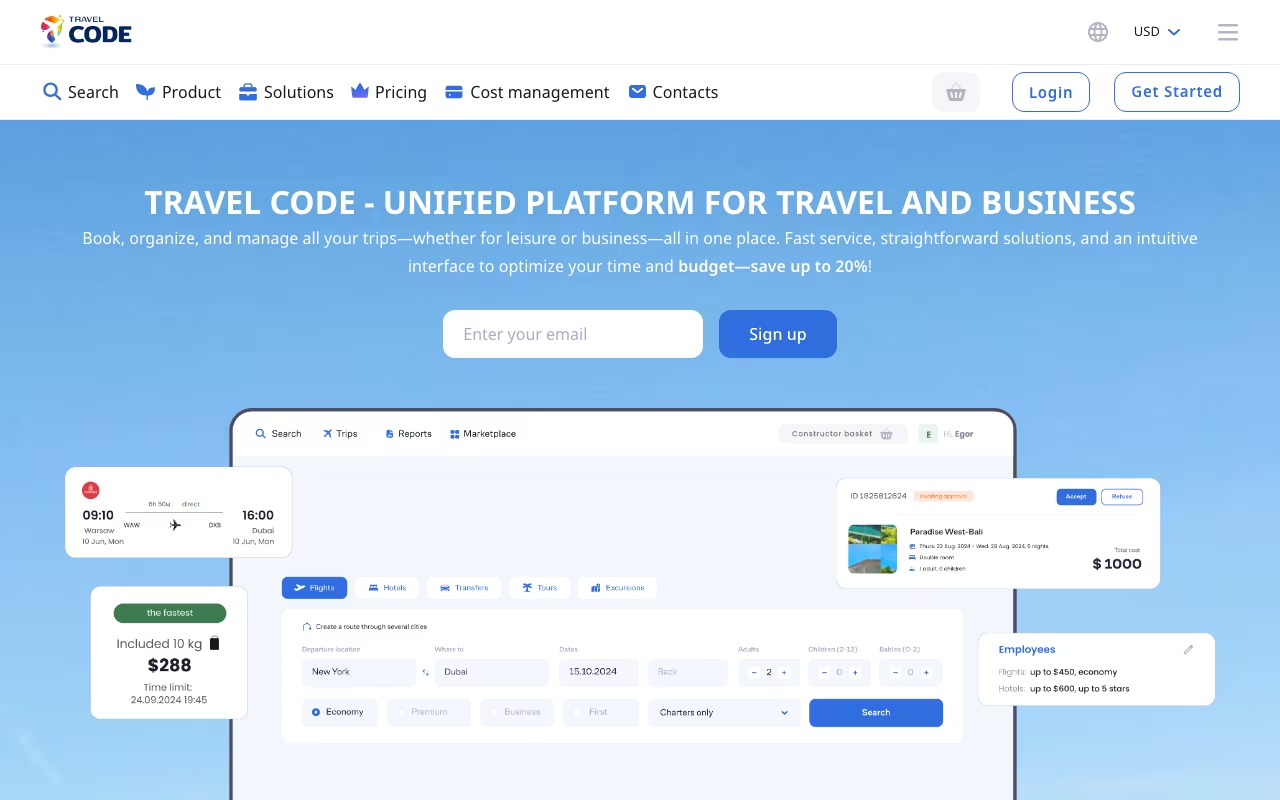
What Travel Code is
Travel Code is a corporate travel and spend platform with a free Starter plan and flat monthly pricing that does not grow with headcount. Employees book flights, hotels, rail, cars and transfers under company policy, and Travel Code Inc. is an IATA and ARC accredited agency that reports SOC 2 and GDPR compliance. It pitches itself at mid-market companies with 100 to 7,000 employees.
Our view: the flat price is the reason to look. Travel Code sets itself against per-seat travel platforms and charges $0, $100 or $290 a month for unlimited travelers and earns the rest from a per-ticket service fee on flights and rail. That model favors companies with many occasional travelers, and it means the fee on tickets, not the subscription, is the number to watch.
Try Travel Code Free Get started →Travel Code pricing in 2026
The Starter plan is free with unlimited travelers. It includes booking across NDC, GDS and low-cost carrier content, the company's contracted hotel rates, a trip planner, travel document storage, basic analytics, letters of guarantee and travel policy templates, with one policy and single-tier approvals.
Premium costs $100 a month, or $85 a month billed annually. It adds better hotel cancellation terms, flight cancellation within the first 24 hours, priority support, multi-tier approvals, an AI Policy Builder, RateGuard auto-rebooking that returns 20% of the savings, two eSIM cards, custom accounting fields, up to two legal entities, iOS and Android apps, basic API access and a white-label option on additional terms.
Pro costs $290 a month, or $247 a month billed annually. It adds Airbnb bookings, unlimited legal entities and travel policies, negotiated rates, airline credit management, custom integrations, a dedicated account manager, SSO (Okta, Google, JumpCloud, passkeys), SCIM provisioning, EU, US or MENA data residency, full API and webhook access, and RateGuard returning 50% of the savings.
On top of any plan, a service fee applies to each airline ticket and rail booking. Travel Code says the fee floats by supplier and route and is shown at checkout, but it does not publish a rate card. Hotels, cars, transfers and group bookings under 10 travelers carry no service fee. There are no setup fees, and annual billing saves 15%.
Prices checked on the Travel Code pricing page in September 2026. Plans and limits change, so confirm before you buy.
RateGuard is the standout feature
After a flight or hotel is booked, RateGuard keeps watching the price. If it drops, Travel Code voids and rebooks within the airline's and hotel's rules and returns 20% of the difference on Premium or 50% on Pro, keeping the rest to fund the monitoring. Starter does not include it. The feature pays off on routes where fares move after booking, and it costs the traveler nothing in effort.
How it works day to day
A travel manager sets policies and approval chains, or lets the AI Policy Builder read an existing PDF policy and configure the rules. Employees then book inside those limits: compliant fares show first, and out-of-policy options are flagged with a reason and routed to an approver. Negotiated corporate codes load through Amadeus and stack on top of public and NDC fares.
Travel Code says a typical migration for a company of 100 to 500 employees takes about nine days and two to three weeks for larger programs. Beyond booking, Travel Code sells a separate Spend product with expense management, itemized receipt scanning, virtual Visa cards and a Net-60 card, priced per active user and usable with or without the travel plans.
Who it's for
Small and mid-size companies that want structured booking and policy control without per-traveler fees. The free Starter tier is a no-risk way to test centralized travel management, and Premium at $85 a month on annual billing covers most mid-market needs.
Sign Up for Travel Code Get started →Companies that need SSO and HR provisioning from day one should budget for Pro. Programs dominated by long-haul flights should get the ticket fee in writing first, because that fee, not the plan price, will decide the total cost.
Visit Travel Code Get started →Where Travel Code wins
- Flat pricing with unlimited travelers on every plan, so the subscription does not grow as more employees start traveling.
- A usable free tier: Starter includes booking across NDC, GDS and low-cost content, contracted hotel rates, policy templates and basic analytics at $0.
- RateGuard pays back automatically, returning 20% (Premium) or 50% (Pro) of the savings when a booked fare or rate drops.
- No service fee on hotels, cars, transfers or group bookings under 10 travelers, and no setup or implementation fee.
- Travel and spend in one place, with an optional expense and corporate card product that can be combined with the travel plans or used on its own.
Where it falls short
- The ticket service fee has no published rate. It floats by supplier and route and is shown only at checkout, so flight-heavy programs cannot model the full cost upfront.
- SSO, SCIM, full API and webhooks are Pro-only, which pushes any company with an identity provider to the $247 a month annual tier.
- Starter is limited to one travel policy, single-tier approvals and no RateGuard, so it suits small teams rather than a real travel program.
- A young vendor next to incumbents. Travel Code names 200+ international teams as customers, so expect a thinner partner and integration ecosystem than long-established rivals such as SAP Concur or Navan.
- White-label comes with additional terms on Premium and Pro rather than a listed price.
Frequently asked questions
Is Travel Code free?
Yes. Travel Code's Starter plan costs $0 with unlimited travelers and covers booking, contracted hotel rates, basic analytics and policy templates. A per-ticket service fee still applies to flights and rail on every plan, including Starter.
How much does Travel Code cost?
Travel Code Premium costs $100 a month, or $85 a month billed annually, and Pro costs $290 a month, or $247 billed annually (September 2026). Both cover unlimited travelers, plus a floating service fee on each airline ticket and rail booking.
What is RateGuard?
RateGuard is Travel Code's price monitor. After booking, it watches the fare or rate, rebooks when the price drops, and returns 20% of the savings on Premium or 50% on Pro. It is not included on the free Starter plan.
Does Travel Code support SSO?
Only on Pro. SSO through Okta, Google, JumpCloud or passkeys, SCIM provisioning, full API and webhook access and regional data residency are all Pro features.