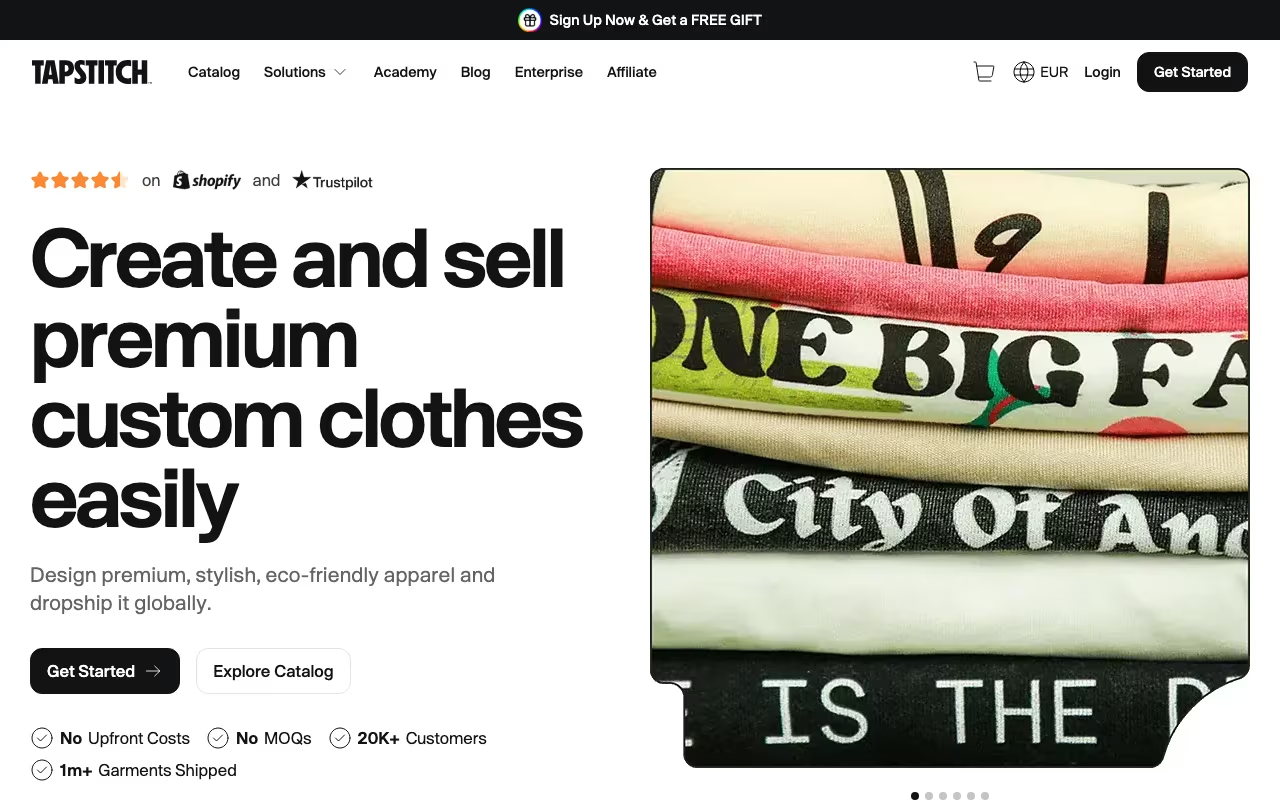
The print-on-demand market is flooded with options, but most platforms optimize for price. Tapstitch optimizes for quality. Their focus is heavyweight premium blanks (6.5oz+ t-shirts, 400 GSM fleece hoodies) with DTG and DTF printing. If you're building a clothing brand that competes on fabric quality, not just price, that's the pitch.
Backed by $21.8M in Series B funding (March 2025) and supporting 24,000+ brands, Tapstitch has shipped over 1M garments worldwide. They're positioned as the premium/fashion-first alternative to Printful and Printify.
Explore Tapstitch Get started →How It Works
Design your products, connect your Shopify/WooCommerce/Etsy store, and Tapstitch handles production and fulfillment. No minimum orders. You sell, they print and ship.
Blank quality: 100+ premium blank options. Heavyweight t-shirts, fleece hoodies, and other garments that feel noticeably different from the thin, cheap blanks most POD services use.
Print methods: DTG (Direct to Garment) and DTF (Direct to Film). Water-based inks. The print quality is strong compared to most POD competitors.
Branding: Custom neck labels available ($1.50/unit). Hang tags and branded packaging in development.
Fulfillment: US and international centers. US shipping runs 5-7 days after 2-4 days production. International takes longer (10-25 days depending on destination).
Pricing
No monthly subscription. You pay per order:
- Starter (Free): On-demand printing, 1 storefront, automated dropshipping.
- Growth: Multi-store integrations, volume discounts. No monthly fee.
- Enterprise: Custom quotes for 100+ unit bulk orders.
Example unit economics on a heavyweight tee: blank ~$11 + print ~$5 + neck label ~$1.50 + US shipping ~$5.50 = ~$23 cost. At $40 retail, that's ~$17 profit (~42% margin). Not bad for POD.
See Tapstitch Pricing See plans →Tapstitch vs. Printful vs. Printify
Operations tools, published pricing
| Tool | Pricing | Model |
|---|---|---|
| Tapstitch | Custom merchandise platform, per-order pricing | Subscription |
| Shippo | $19/mo (lowest published recurring price) | Subscription |
| Stamped | $23/mo (lowest published recurring price) | Subscription |
| Housecall Pro | $69/mo (lowest published recurring price) | Subscription |
| SimplePractice | $39/mo (lowest published recurring price) | Subscription |
| Foursixty | $50/mo (lowest published recurring price) | Subscription |
Printful: Bigger catalog, more product types, better-known brand. But standard blanks, not premium. If you want a fashion brand feel, Tapstitch wins on fabric quality.
Printify: Cheapest option with the widest network of print providers. Quality varies because you're choosing from dozens of different manufacturers.
Gelato: Strong international fulfillment with local production in 30+ countries. Better for global brands prioritizing fast local delivery.
Tapstitch's niche is clear: premium blanks for brands that compete on quality. If you're selling $15 tees on volume, Printify is cheaper. If you're selling $45 tees on brand, Tapstitch makes more sense.
Bottom Line
Tapstitch is the POD platform for clothing brands that care about fabric quality. The heavyweight blanks and clean printing genuinely differentiate from the typical thin POD garments. But the trade-off is higher unit costs and longer international shipping. For fashion-forward brands where the product quality drives repeat purchases, that trade-off works.
Start Selling with Tapstitch Get started →How Tapstitch works
Tapstitch is an on-demand apparel manufacturer that puts print-on-demand, dropshipping and cut-and-sew collection development in a single account. You upload artwork, apply it to blanks from its catalogue (the site cites 500+ fashion-oriented blanks: oversized hoodies, washed tees, French terry sweatpants, activewear), connect a store, and Tapstitch prints, packs and ships each order after the customer buys. It owns its manufacturing facilities rather than brokering work out to third-party print shops, and it pushes branding extras (custom labels, hang tags, insert cards) so the finished garment reads as your brand rather than a generic blank. Printing is DTG on Brother and Kornit machines.
Signing up costs nothing, with no subscription fee. You design in the browser using the Design Tool 2.0, pick your blanks, then connect a storefront: Shopify, Etsy, WooCommerce, Wix, Squarespace, BigCommerce, or TikTok Shop (TikTok is routed through Shopify, per their own guide). The store sync creates a fulfilment location on your side, and you have to set shipping rates yourself before orders will flow: Shopify adds a new location, and WooCommerce requires Permalinks set to anything other than "Plain". Listings you already have are matched to Tapstitch designs through a linking step, after which orders fulfil automatically. Production runs out of China plus a newer Los Angeles facility, and the catalogue can be filtered by which items ship from where. Branding add-ons carry extra fees.
Where Tapstitch wins
- No subscription and an MOQ of one unit. Single-item orders and full bundles are priced the same way, so there is no platform fee eating your margin before the first sale.
- It owns its factories and does cut-and-sew. You can build a garment from the fabric up instead of printing on somebody else's blank.
- A branding suite that goes past the print. Custom neck labels, hang tags and insert cards can be attached to orders.
- Real published shipping numbers instead of vague promises. USA Special Line averages 5 days with 95% inside 7, International Express averages 5 days, Standard averages 25 days with 95% inside 30. Postage is itemised too: $4.96 for the first item China-to-US and $4.44 US-to-US on a 250g tee, with cheaper add-on rates.
- US fulfilment from an LA centre delivering in 3 to 6 business days, with a catalogue filter so you can see which items qualify.
Where it falls short
- No sample orders as a distinct process. You place a normal one-unit order, so there is no discounted pre-production proof before you list.
- Branded packaging bags are still "under development" according to their own help centre, so the unboxing side of customisation is incomplete.
- Production is not instant. Small orders take 3 to 7 working days and ship by the 8th working day, bulk runs take 7 to 15 working days and ship by the 16th, all before shipping time.
- Return terms are tight. Misprint, damage or defect claims must be filed within 7 days of receipt, items must be unused, unworn and unwashed, and return shipping is at your expense.
- US fulfilment is only partial. Filtered catalogue items ship from LA, the rest come from China with the longer transit and duty exposure that implies.
- No published public API. Integration is limited to the listed storefront connectors, so Amazon, eBay and custom stacks are not covered.
Who should use Tapstitch
Tapstitch fits creators and small fashion brands who want retail-feeling, branded garments (custom labels, cut-and-sew, fashion-cut blanks) without holding inventory, and who care more about garment quality than about a huge catalogue of mugs and posters. If your brand lives or dies on how the hoodie actually fits and what the neck label says, the cut-and-sew and branding options are the reason to be here.
Skip it if you need a broad non-apparel print-on-demand range, an API or headless integration, Amazon or eBay as sales channels, or guaranteed all-domestic production. The LA facility covers part of the catalogue, not all of it, and the connector list is the whole integration story.