
10 Best AI Tools for Trip Planning in 2026 (Compared and Ranked)


Key facts10 tools compared: Kayak AI, Layla AI, Google Gemini, ChatGPT, Wonderplan, iPlan.ai, Curiosio…
- 10 tools compared: Kayak AI, Layla AI, Google Gemini, ChatGPT, Wonderplan, iPlan.ai, Curiosio, Vacay Chatbot, Claude, Polarsteps
- Kayak AI (best for: Real-time pricing): Free
- Layla AI (best for: Dedicated trip planning): Free/$9.99/mo
- Google Gemini (best for: Ecosystem integration): Free/$19.99/mo
- ChatGPT (best for: Brainstorming + flexibility): Free/$20/mo
Short answer: use Kayak AI for real-time flight and hotel pricing, Layla AI for the most complete dedicated trip planner, and ChatGPT if you want the most versatile travel brainstorming partner.
40% of travelers now use AI tools for trip planning. Among those who've tried it, 63% rely on AI for most or every trip. 96% say they'll use it again. The adoption curve is steep because the use case is obvious: instead of opening 15 browser tabs to compare flights, hotels, activities, and restaurants, you describe what you want and get a structured itinerary. The tools that connect to real-time pricing data are the ones worth paying attention to.
I've compared every major option across different trip types: weekend city breaks, multi-country backpacking, family vacations, and road trips. Here's what actually delivers.
Quick comparison
| Tool | Best for | Price | Standout feature |
|---|---|---|---|
| Kayak AI | Real-time pricing | Free | Flights + hotels with actual prices |
| Layla AI | Dedicated trip planning | Free/$9.99/mo | Full itinerary + live pricing |
| Google Gemini | Ecosystem integration | Free/$19.99/mo | Google Maps + hotel price alerts |
| ChatGPT | Brainstorming + flexibility | Free/$20/mo | Custom GPTs for travel |
| Wonderplan | Free trip planning | Free/$49.99/yr | Niche interest itineraries |
| iPlan.ai | Minute-by-minute planning | Free/~$3.99/mo | Real-time schedule adjustments |
| Curiosio | Road trips | Free | Proprietary AI for route planning |
| Vacay Chatbot | Theme-based travel | Free/$9.99/mo | Specialized travel chatbots |
| Claude | Complex trip research | Free/$20/mo | 1M token context for detailed planning |
| Polarsteps | Tracking + journaling trips | Free | Route tracking + travel journal |
Kayak AI

Kayak AI is the only trip planning tool backed by a major travel metasearch engine with actual real-time pricing data. Every other AI planner generates itineraries with estimated costs. Kayak AI tells you what flights and hotels actually cost right now, searches across hundreds of providers, and lets you book directly.
The AI Mode (launched October 2025) combines KAYAK's flight and hotel data with conversational AI. Type "I want to party for NYE, where should I go?" and Kayak AI pairs travel inspiration with real pricing. Ask "flights from Paris to anywhere under $200 this weekend" and get actual bookable options. PriceCheck lets you upload a screenshot of any flight itinerary and KAYAK scans hundreds of sites for a better deal.
The pick when you want actual real-time flight and hotel prices instead of estimates, and it is completely free. It is a search and comparison tool, not a day-by-day planner, so pair it with Layla or ChatGPT for the itinerary.
Completely free. No subscription. Kayak monetizes through booking commissions.
Ratings: Google Play: 4.8/5 (290,000+ reviews). Trustpilot: 2.7/5 (reflects the overall booking platform, not the AI feature specifically).
The limitation: Kayak AI is a search and comparison tool, not a full trip planner. It doesn't generate day-by-day itineraries with activities, restaurants, and logistics. It finds and prices travel components. For the planning layer, pair it with Layla or ChatGPT.
Layla AI

Layla AI (which acquired Roam Around, the original AI itinerary builder with 10M+ itineraries) generates complete day-by-day travel plans covering flights, hotels, activities, and dining. The live pricing feature compares costs across Skyscanner, Booking.com, and GetYourGuide. Road trip planning includes scenic stops, driving times, and overnight stays.
Key features:
- Specialized planners for families, couples, solo travelers, and budget trips
- Collaborative editing: multiple people modify the itinerary in real time
- Live pricing: pulls current costs from booking platforms
- Road trip mode: scenic stops, driving times, overnight stays
- AI travel agent with 24/7 support and exclusive hotel discounts
A full day-by-day planner covering flights, hotels, activities and dining, with a free tier and Premium at $9.99/month. The catch is that live pricing isn't always as live as advertised, so double-check costs before booking.
Free tier (basic itinerary generation). Premium at $9.99/month or $49/year (live pricing, advanced personalization, exclusive discounts). 8M+ trips planned to date.
Ratings: Trustpilot: 4.9/5 (51 reviews, small sample). Product Hunt: 5/5 (975 reviews). Google Play: 4.8/5.
Live pricing isn't always as "live" as advertised. Some users report inaccurate flight connections and hotel pricing discrepancies. Test it thoroughly on a shorter trip before relying on it for complex multi-city bookings.

Google Gemini
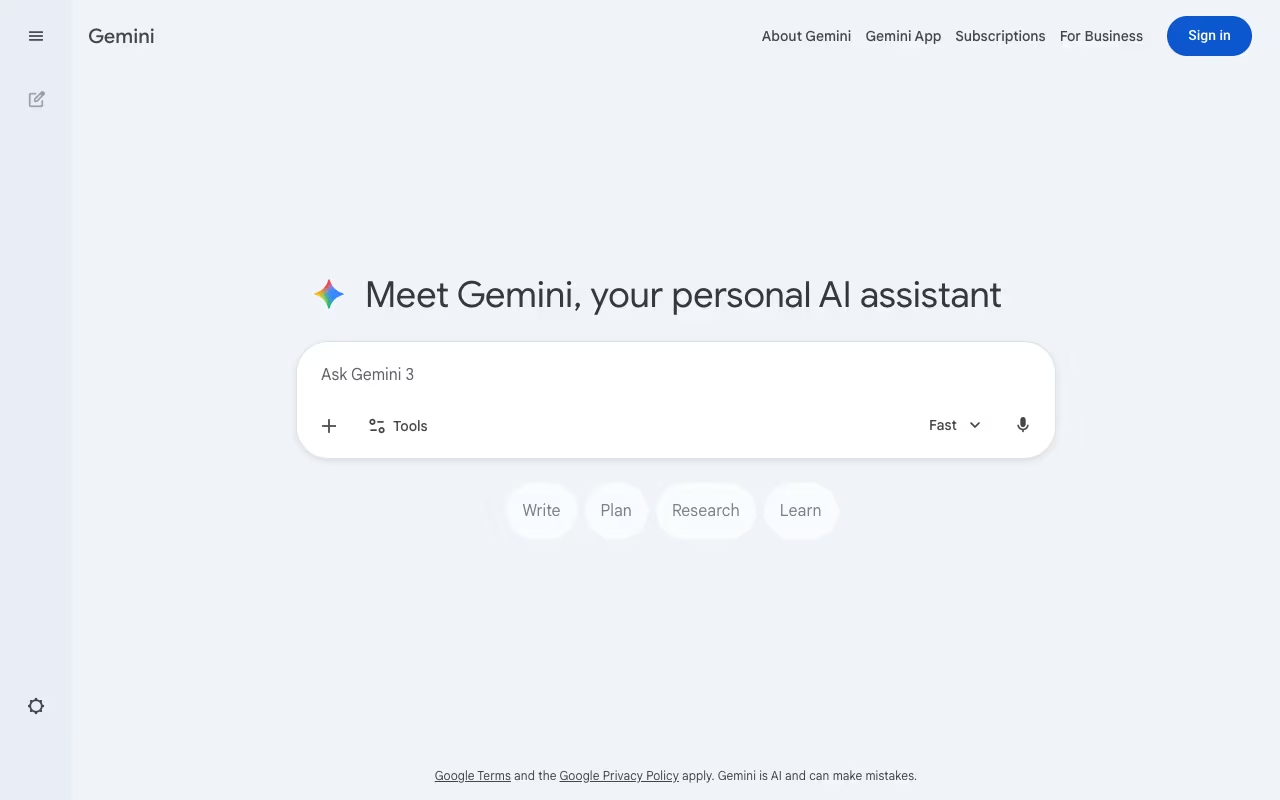
Google Gemini plugs into the entire Google ecosystem for travel planning. Generate an itinerary, and it links directly to Google Maps for route visualization. Hotel price tracking sends email alerts when prices drop. Custom AI agents called Gems let you create specialized travel planners (e.g., "budget-friendly European trips" or "dog-friendly hotels").
The Maps integration is the killer feature. Gemini identifies places from screenshots and saves them to your map lists. Ask about a restaurant you saw on Instagram, and Gemini finds it, shows reviews, hours, and adds it to your trip map. No other AI planner connects to real-world location data this deeply. Real-time weather and local event data adapts itineraries on the fly.
The natural choice if you already live in Google Maps, since itineraries link straight to your map and it can save places from screenshots. Travel features are scattered across Gemini, Maps and Search, and it can hallucinate details.
Free tier (basic itinerary generation). AI Pro at $19.99/month (Deep Research for destination analysis, hotel price tracking, 2TB cloud storage). AI Ultra at ~$42/month for maximum model access.
The limitation: not a dedicated travel tool. The travel features are scattered across Gemini, Maps, and Search rather than one unified interface. Can hallucinate restaurants that don't exist. No collaborative planning. Requires knowing how to prompt effectively for travel-specific results. For broader AI productivity tips, see our dedicated guide.

ChatGPT
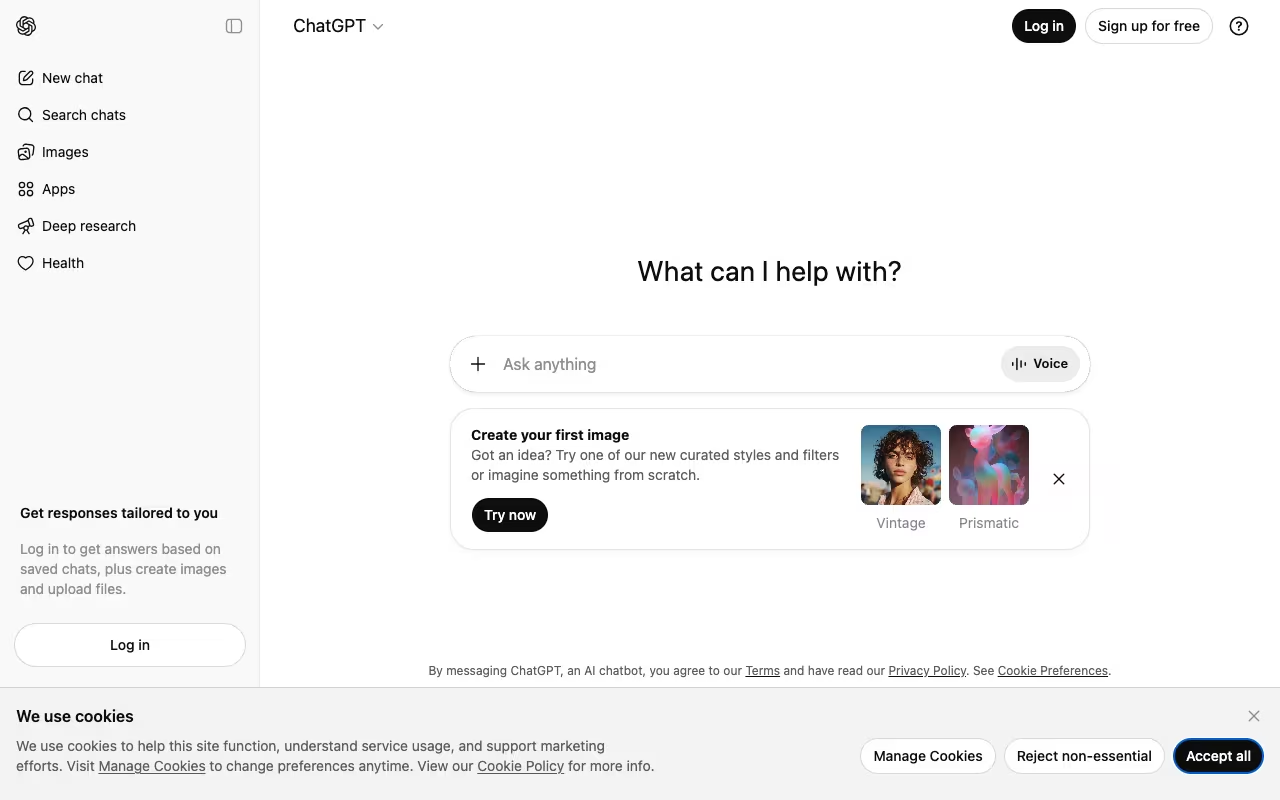
ChatGPT isn't purpose-built for travel, but its conversational flexibility makes it the best tool for the messy early stages of trip planning. "I have 10 days, I like history and street food, I hate crowds, and my budget is $3,000. Where should I go?" produces genuinely useful, personalized suggestions that dedicated planners struggle to match.
Custom GPTs built specifically for travel planning (thousands available in the GPT Store) add specialization: budget travel optimization, adventure trip planning, family vacation itineraries, foodie city guides. Web browsing on Plus pulls current information on visa requirements, seasonal events, and local conditions.
Go with ChatGPT for the messy early stage of deciding where to go, since conversational flexibility beats dedicated planners there. It has no real-time pricing, booking or maps, and can hallucinate restaurants and hotels, so verify before you commit.
Free tier (limited messages). Go at $8/month for more access. Plus at $20/month (GPT-5.6 Sol with thinking levels and web browsing). Pro at $100 or $200/month for heavy use.
The downside: no real-time pricing, no booking integration, no map component. ChatGPT generates text itineraries that you then need to manually research for pricing and logistics. Can hallucinate restaurants, hotels, and attractions. The suggestions are a starting point, not a finished plan.
Wonderplan

Wonderplan positions itself as a free AI travel agent. Enter your destination, dates, interests, budget, and travel style, and it generates a personalized itinerary with interactive maps, calendar views, and accommodation recommendations. The niche interest planning is where Wonderplan stands out: it crafts itineraries for specific themes (food tours, history deep-dives, adventure trips, cultural immersion) rather than generic sightseeing.
Real-time collaboration lets groups plan together, with a centralized dashboard for bookmarks and shared edits.
A free, themed planner that stands out for niche trips like food tours and history deep-dives, with group collaboration built in. Suggestions often need manual adjusting, multi-city trips come out generic, and there is no booking or mobile app.
Core planning features are free (the site notes "at least for now"). Premium at $49.99/year (offline PDF downloads, advanced AI features, live multi-user editing). Community of 20,000+ travelers.
Ratings: Product Hunt: 4.6/5 (11 reviews).
The limitation: AI suggestions don't always match specific preferences and often need manual adjustments. Multi-city trips produce generic results. No booking integration. No mobile app. Small user base means limited community validation.
iPlan.ai

iPlan.ai plans down to the minute: transportation timing between activities, meal breaks, rest periods, and buffer time for walking. The real-time modification feature adjusts your schedule based on traffic, weather, and booking changes. Budget tracking integrates cost estimates for accommodations, transportation, and activities.
Email monitoring alerts you to flight cancellations, weather warnings, and local restrictions that affect your plans. Coverage now spans 20,000+ cities worldwide.
Pick iPlan.ai for short, detail-oriented city trips where minute-by-minute scheduling pays off. It caps trips at 10 days, is mobile-only with no interactive map, and is less useful if you travel spontaneously.
Free tier (basic planning). Pro at ~$3.99/month or ~$9.99/year.
Ratings: App Store: ~4.5/5.
The limitation: maximum trip length of 10 days. Mobile-only (no desktop interface). No interactive map. Some users report the content generation doesn't change much when parameters are adjusted, and coverage quality varies by destination. Best for short, detail-oriented city trips where minute-by-minute scheduling adds value. Less useful for flexible, spontaneous travel styles.
Curiosio

Curiosio built its own AI engine (Ingeenee) trained on crowdsourced geographic data from Wikivoyage, Wikipedia, OpenStreetMap, GeoNames, Wikidata, and DBpedia. The result: road trip itineraries that surface off-the-beaten-path stops that other tools miss entirely. Filter by interest (culture, food, history, nature, adventure), and Curiosio maps a route with time estimates, costs, and Google Maps integration.
Customize routes as round-trip or one-way, set waypoints, specify number of travelers, dates, vehicle type, and budget. Links to Wikivoyage and Wikipedia provide detailed information about each stop.
The best tool here for off-the-beaten-path road trips, and it is completely free. It is irrelevant for city breaks or flights, covers only roughly 29-37 countries, has no mobile app, and depth depends on destination popularity.
Completely free. Expedia partnership for hotel booking within plans.
The limitation: covers approximately 29-37 countries (varies by beta version). Best for road trips specifically, not city breaks or international flights. Depth depends on destination popularity. No mobile app. The niche focus means it's the best tool for its specific use case and irrelevant for everything else.
Vacay Chatbot
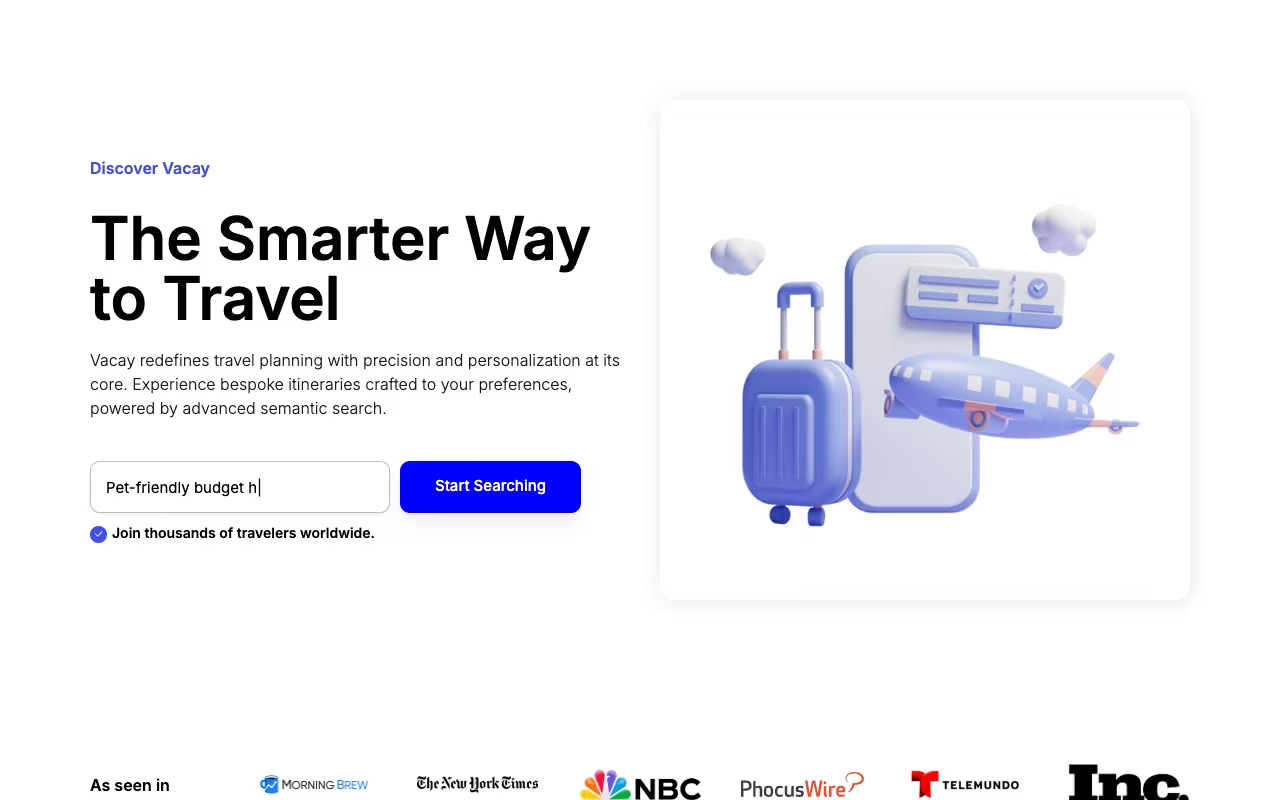
Vacay offers specialized chatbots for different travel categories: hotels, dining, cruises, flights. Instead of one generic AI, you get topic-specific advisors with deeper knowledge in their domain. Multilingual support covers 150+ languages. Destination guides provide in-depth local information.
Skip it unless you value topic-specific chatbots for hotels, dining, cruises and flights. Suggestions come from its own database with no real-time availability or pricing, paid plans are US-only, and the user base is very small.
Personal plan is free (unlimited standard chatbot access, chat history, destination guides). Premium at $9.99/month (advanced AI models, save and organize itineraries, priority support). Professional at $49/month (white-label tools for travel advisors).
The limitation: suggestions are limited to its database, with no real-time availability or pricing. Web only, no mobile app. Struggles with complex multi-layered requests. Paid plans limited to US customers. Very small user base with almost no public reviews.

Claude
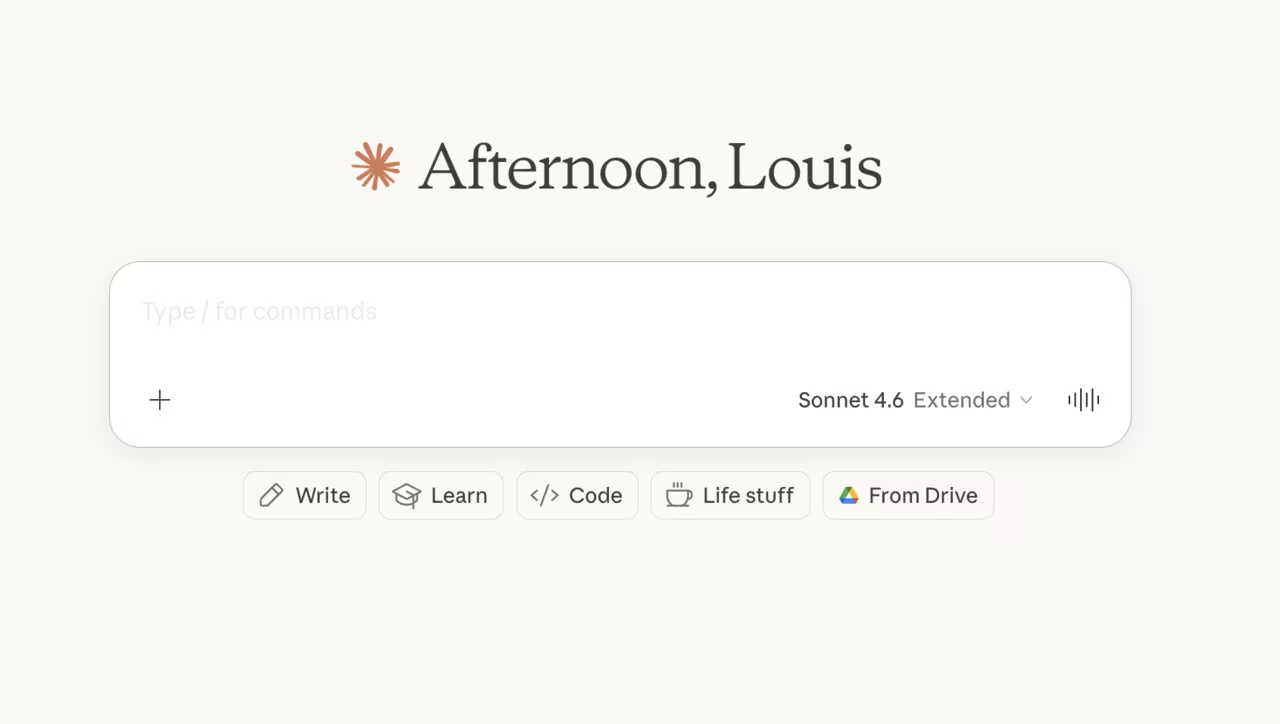
Claude excels at the research-heavy side of trip planning. The 1M token context window (on Pro) means you can paste flight options, hotel comparisons, activity lists, dietary restrictions, group preferences, and budget constraints into a single conversation. Claude reasons across all of it simultaneously, identifying scheduling conflicts, suggesting optimal routes, and flagging logistics issues.
That reasoning matters most on a multi-country trip for a group with different dietary needs, activity preferences, and budget levels, where cross-referencing flight schedules against hotel check-in times, catching visa requirements, and flagging flights with brutal layovers is the kind of constraint-solving no dedicated planner handles as well.
A thinking partner for complex logistics, like multi-country group trips where you paste in flights, hotels and constraints and let it catch conflicts. It has no real-time pricing, booking or maps, so it is not a point-and-click itinerary builder.
Free tier (basic planning). Pro at $20/month. Max at $100/month (5x Pro capacity) or $200/month (20x). No real-time pricing, no booking, no maps. Claude is a thinking partner for complex trip logistics, not a point-and-click itinerary builder.
Anthropic is also expanding into enterprise travel with hotel personalization and service automation through its Model Context Protocol, though that's a B2B play, not a consumer trip planner.
Polarsteps
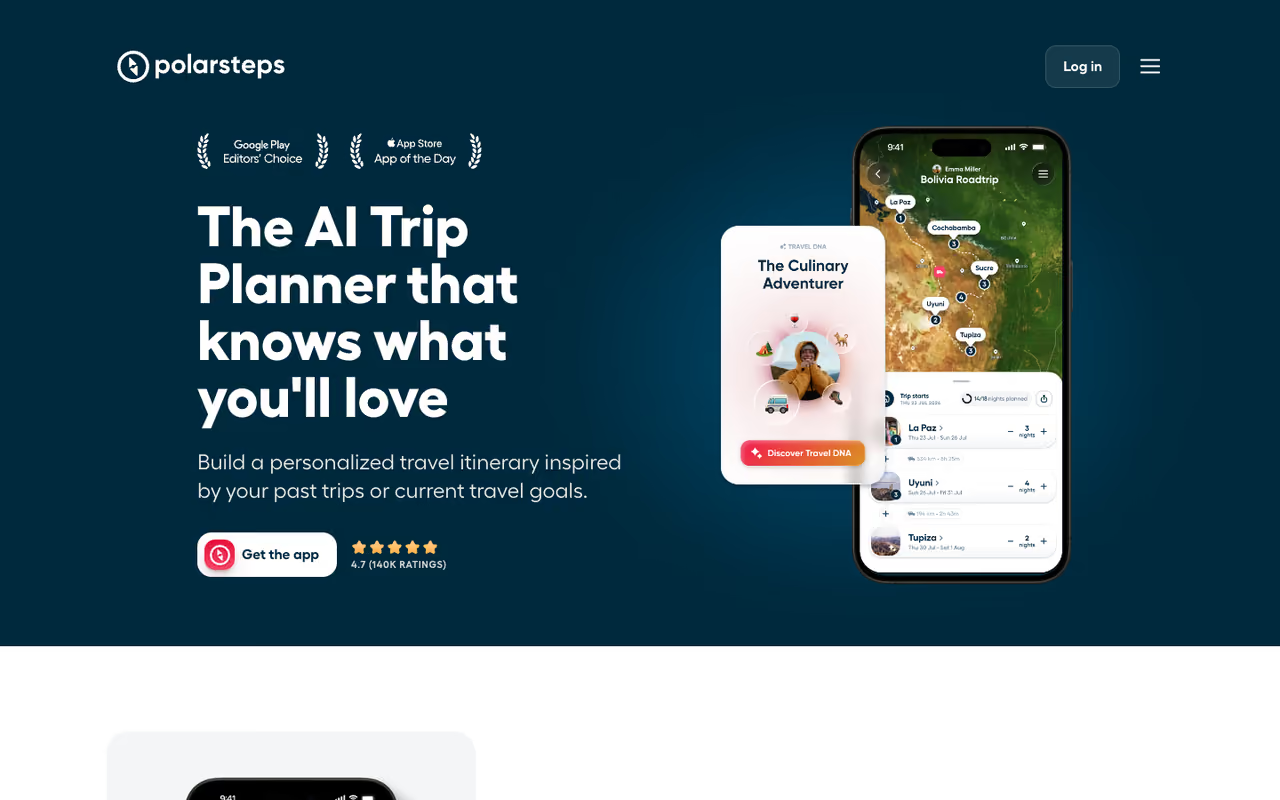
Polarsteps started as the app long-term travelers use to record trips: it tracks your route in the background, plots it on a map, and turns the journey into a shareable travel journal. Its AI Trip Planner extends that into the planning stage, generating a day-by-day itinerary from your destination, dates, and interests, then dropping it into the same app you'll use to navigate and document the trip.
That continuity is what sets it apart from the other tools here. Most planners stop once the itinerary is built; Polarsteps carries the plan through the trip itself, logging where you actually went and adjusting the record as plans change on the road.
A good fit if you want the plan to carry through the trip, since the same app tracks and journals where you actually went. The AI planner is newer and lighter on logistics than Layla or iPlan.ai, with no real-time pricing or booking.
Free to plan and track. Optional premium features and printed photo travel books are paid add-ons.
The limitation: the AI planner is newer and lighter on logistics than dedicated tools like Layla or iPlan.ai, with no real-time flight or hotel pricing and no in-app booking. Its strength is the trip you take, not deep pre-trip comparison work.
How to choose
Need real pricing now: Kayak AI. Free, real-time, bookable. No other tool shows you what flights and hotels actually cost right now.
Want a complete itinerary built for you: Layla AI. The most feature-complete dedicated trip planner with booking links and collaborative editing.
Planning a road trip: Curiosio. Purpose-built for driving routes with off-the-beaten-path stops.
Complex multi-destination trip: Claude for constraint-solving and logistics, then Kayak for pricing and booking.
Flexible exploration ("where should I go?"): ChatGPT. Best for open-ended brainstorming when you don't have a destination yet.
Budget approach: Kayak (free) for pricing + Wonderplan (free) for itineraries + Google Maps for navigation. Total: $0.
One thing every AI planner gets wrong: they recommend popular tourist spots by default. The best trips include local discoveries that aren't in any database. Use AI for the structure and logistics. Use locals, food blogs, and wandering for the soul of the trip. If you're also using AI for work, the same prompting skills that make you productive at the office make you a better trip planner. For more ways to automate repetitive tasks with AI, see our guide.
FAQ
Can AI plan an entire trip for me?
AI handles itinerary structure, flight/hotel research, activity suggestions, and logistics planning well. It does not handle booking (except Kayak), real-time changes during travel, or subjective preferences like "find me a restaurant with the vibe of that place we loved in Barcelona." Use AI for the 80% that's research and logistics. Add your own judgment for the 20% that makes a trip memorable.
Are AI trip planners accurate?
Mostly, but verify everything. Flight connections, hotel pricing, restaurant hours, and visa requirements can be wrong. Kayak AI has the best accuracy because it pulls from real booking databases. Chatbot-based planners (ChatGPT, Claude, Gemini) can hallucinate places that don't exist. Always confirm booking details directly with airlines and hotels.
What's the best free AI trip planner?
Kayak AI for real-time flight and hotel pricing. Curiosio for road trip routing. Wonderplan for general itinerary generation. ChatGPT free tier for brainstorming. All four are genuinely useful at zero cost. For most trips, the free tools cover 90% of planning needs.
Should I use a dedicated trip planner or ChatGPT?
For simple trips (weekend city break, beach vacation), a dedicated planner like Layla or Wonderplan is faster. For complex trips (multi-country, group travel, specific interests), ChatGPT or Claude's conversational flexibility handles nuance better. For pricing and booking, Kayak AI beats both. Most travelers get the best results combining 2-3 tools.
Can AI help with budget travel?
Yes. Kayak AI finds the cheapest flights and hotels across hundreds of providers. ChatGPT and Claude optimize itineraries to reduce costs (suggesting overnight buses instead of flights, free walking tours, local markets over restaurants). Google Gemini's hotel price tracking alerts you when prices drop. For budget-conscious travelers, AI tools pay for themselves on the first trip.
How do AI trip planners handle group travel?
Layla AI and Wonderplan offer real-time collaborative editing where multiple people modify the itinerary. Claude handles complex group constraints (different budgets, dietary needs, activity preferences) better than any dedicated planner because of its large context window. For group trips, start with Claude to work out logistics, then transfer the plan to Layla for collaborative editing and booking links.
Want to master AI tools for travel and beyond? Start your free 7-day trial →
Some offers on this page may be paid placements or contain affiliate links.
