
Last updated: May 2026
What Is Leadfeeder?
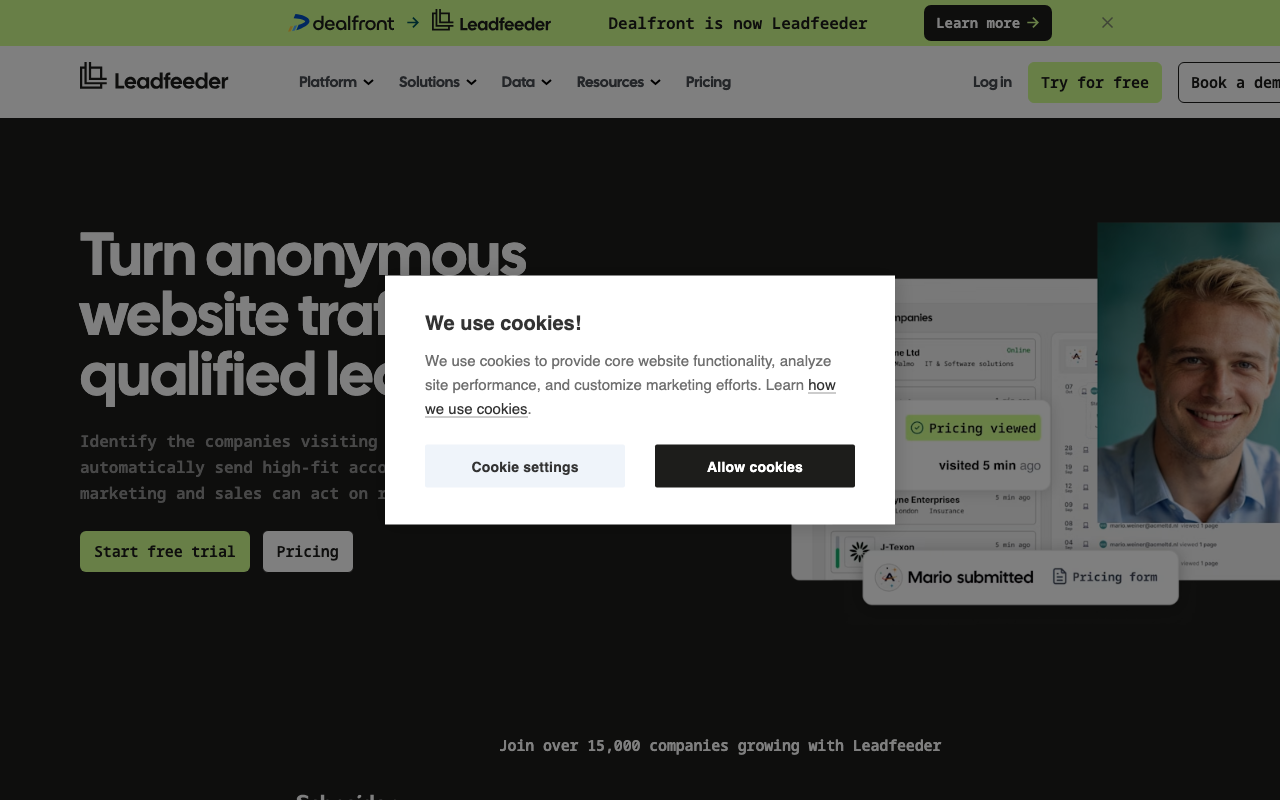
Leadfeeder (now part of Dealfront) is the B2B website visitor identification platform that reveals which companies are visiting your site even when individual visitors do not fill out forms. Founded in 2012 in Helsinki, Leadfeeder serves over 60,000 B2B teams with company-level visitor data, intent signals, and CRM integration.
The pitch is anonymous traffic intelligence. Most B2B visitors browse before converting. Leadfeeder identifies the companies behind those visits, shows what pages they viewed and for how long, and pushes qualifying accounts to sales. Sales teams reach out to interested accounts before competitors do.
The technology matches IP addresses to company records using IP-to-company databases plus traffic pattern analysis. Coverage is strongest for office-based traffic in North America and Western Europe. Identification rates typically run 30-60% of total B2B traffic depending on industry and geography.
Try Leadfeeder FreeHow Leadfeeder Works
Install the tracking script on your website. Leadfeeder identifies visiting companies and shows them in the dashboard with detailed visit data: pages viewed, time on site, repeat visits, traffic source, and a calculated lead score based on engagement signals.
Visitor companies enrich with firmographic data: industry, employee count, revenue range, location, key contacts. For each visiting company, Leadfeeder can suggest sales contacts who match common decision-maker profiles (CMOs at SaaS companies, VPs of HR at enterprises, etc.).
Filters and feeds organize visitor traffic for sales workflows. Build a feed for "Enterprise companies in fintech who visited the pricing page twice" and assign to your enterprise SDR. Other feeds route mid-market visitors to inside sales or marketing for nurture campaigns.
CRM integration pushes companies to Salesforce, HubSpot, Pipedrive, and others. New visits create accounts; existing accounts get visit history logged. Sales reps see in their CRM that an account visited the site recently with what content they engaged.
Slack and email alerts notify teams when high-value accounts visit. Set rules like "If a company with 500+ employees visits the demo page, post to #sales-hot in Slack."
Leadfeeder Pricing in 2026
Free: 7-day visitor view, basic features, up to 100 identified companies. Trial-grade.
Paid: From €99/month annually, scaling by the number of unique identified companies per month. Higher tiers (€299-€799+/month) include more identified companies, longer history, advanced filters, and team features.
Dealfront acquired Leadfeeder in 2022 and now bundles it with Dealfront's broader sales intelligence platform (contact data, account scoring, intent signals). Pricing for the bundled product runs higher than standalone Leadfeeder.
See Leadfeeder PlansWhere Leadfeeder Wins
- Established product: 12+ years of iteration on the identification algorithm.
- CRM integration depth: native Salesforce, HubSpot, Pipedrive, and Zapier.
- Lead scoring: configurable rules surface highest-intent companies.
- Slack and email alerts: real-time notifications for hot accounts.
- Privacy-aware: company-level identification (not person-level) keeps GDPR posture clean.
Where It Falls Short
- Identifies companies, not people: tells you what company visited, not which person. Person-level products (RB2B) do this for US visitors but with GDPR implications.
- Identification rate varies: home-office traffic, mobile traffic, and traffic from small companies often identifies poorly.
- Pricing climbs fast: high-volume sites pay significant monthly fees for identified company quotas.
- Some accuracy issues: occasional misattributions, especially for shared IP ranges.
Leadfeeder vs RB2B vs ZoomInfo WebSights vs VektorOS
RB2B identifies individual people visiting (US-only). More aggressive on identification, more GDPR risk for non-US use.
ZoomInfo WebSights bundles with ZoomInfo's broader sales intelligence. Better if you already use ZoomInfo for contact data.
VektorOS is the AI-focused alternative with scoring and outreach automation.
Albacross and Lead Forensics are similar European competitors.
Who Should Use Leadfeeder
B2B SaaS marketing teams with content-driven inbound: identify which target accounts engage with content before they fill out a form.
Account-based marketing programs: track target account engagement across the website.
Sales teams in EU with GDPR concerns: company-level identification clean from a compliance standpoint.
Skip it if: your traffic is mostly consumer or mobile (identification rate too low), you need person-level US identification (use RB2B), or you only have low traffic volumes (not worth the subscription).
Frequently Asked Questions
Is Leadfeeder GDPR compliant?
For company-level identification, yes. Person-level data is not collected.
What is the identification rate?
Varies by industry and geography. B2B SaaS sites typically see 30-60% of traffic identified to a company.
Does it work with HubSpot?
Yes, native bidirectional integration.
How accurate is the company identification?
High for unique IP addresses from corporate offices. Less reliable for ISP traffic, mobile, and shared IPs.
Can I export visiting companies to CSV?
Yes on paid plans.