

Last updated: May 2026
What Is Help Scout?
Help Scout is the shared inbox and help desk platform built for customer support teams that want clean UX over enterprise feature bloat. Founded in 2011 in Boston, Help Scout serves over 12,000 businesses worldwide, including Reddit, Trello, and Buffer.
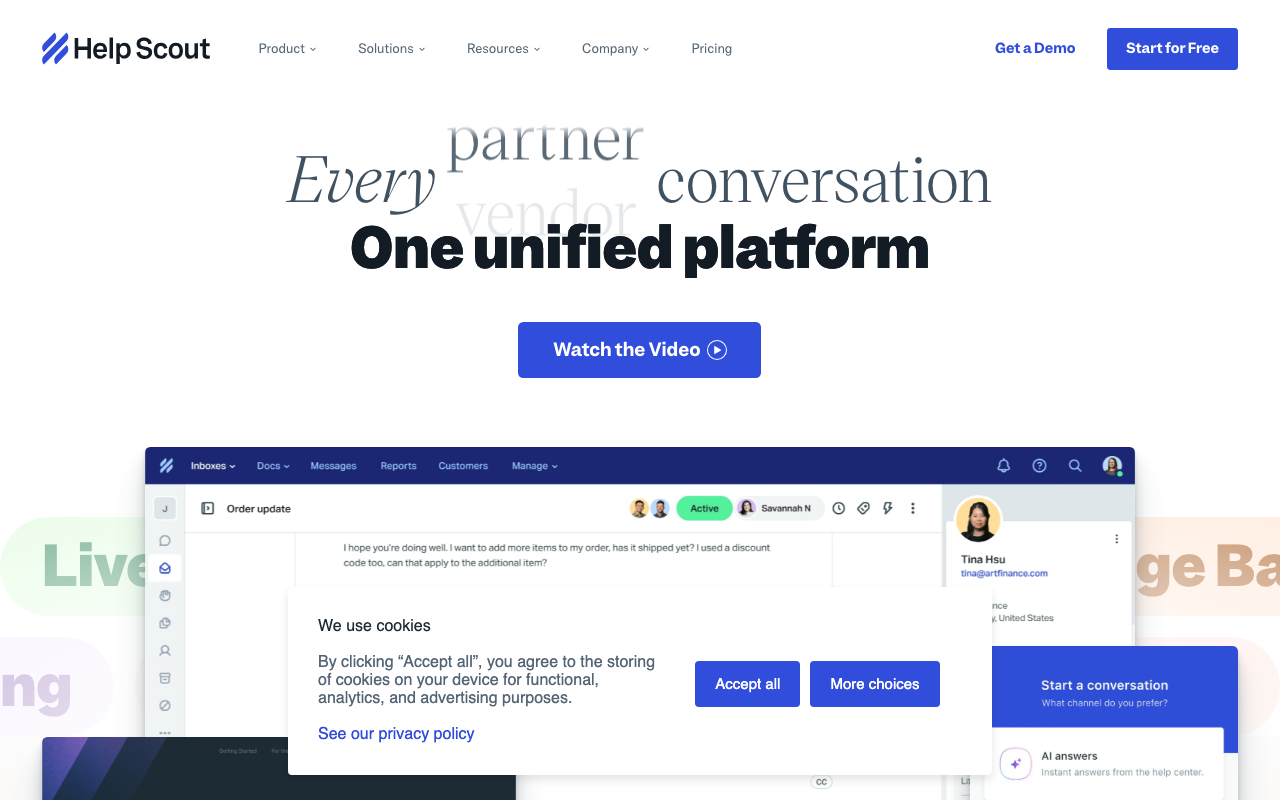
The pitch is "Zendesk without the noise." Help Scout looks like email rather than a ticketing system. Conversations show as threaded emails, not tickets with statuses. Customers receive replies from agent email addresses, not "support@helpscout.com" no-reply addresses. The experience feels personal rather than transactional.
The product targets support teams of 5-100 agents serving consumer or B2B customers. SMB companies prioritizing customer experience over ticketing scale fit well. Enterprise call centers with complex workflows may prefer Zendesk or Freshdesk.
Try Help Scout FreeHow Help Scout Works
Connect inboxes (support@yourcompany.com, sales@, billing@). Help Scout consolidates email, chat, and other channels into mailboxes. Multiple agents see the same conversations; assignments and notes coordinate handoffs without customers seeing internal coordination.
Conversations look like emails, not tickets. Customers receive replies from agent addresses with no "Ticket #12345" subject lines. The thread feels like normal email correspondence; only internally is it tracked as a conversation in a shared inbox.
Knowledge base, called Docs, hosts self-service articles. Customers find answers without filing tickets. Beacon (the chat widget) suggests articles based on questions before connecting to agents. Reduces ticket volume by deflecting common questions.
AI Assist drafts replies, summarizes long threads, and improves writing tone. Agents accept, edit, or rewrite suggestions. Available across paid plans.
Workflows automate routine tasks: routing by topic, tag, or priority; closing stale tickets; sending follow-up surveys; escalating SLA breaches. Visual workflow builder requires no developer skills.
Integrations cover Slack, HubSpot, Salesforce, Shopify, Jira, GitHub, and 100+ apps. API supports custom integrations.
Help Scout Pricing in 2026
Standard: $25/user/month annually. 2 mailboxes, 1 Docs site, basic AI.
Plus: $50/user/month annually. Unlimited mailboxes and Docs, advanced reporting, integrations.
Pro: $65/user/month annually (50+ user minimum). HIPAA compliance, advanced security, dedicated CSM.
15-day free trial. No permanent free plan.
See Help Scout PlansWhere Help Scout Wins
- Customer experience: replies look like real emails, not ticket robots.
- Clean agent UX: less cognitive overhead than Zendesk.
- Docs and Beacon integration: self-service deflection works seamlessly.
- Strong reporting: customer happiness scores, conversation metrics, team performance.
- Founder-led, B-Corp certified: aligned values resonate with mission-driven companies.
Where It Falls Short
- Less feature depth than Zendesk: fewer customization options.
- Phone support requires integration: no native dialer.
- Multi-language support limited: works but less complete than Freshdesk.
- Enterprise-scale workflows can hit limits: best for small to mid-sized teams.
Help Scout vs Zendesk vs Freshdesk vs Intercom
Zendesk is the enterprise default. More features, less elegant UX.
Freshdesk is the Zendesk alternative with multichannel from day one.
Intercom targets product-led B2B with in-app messaging focus.
Front is the closest competitor in shared-inbox category.
Who Should Use Help Scout
SMB customer support teams (5-50 agents): clean UX and customer experience focus.
Consumer brands: email-feel replies improve customer perception.
Subscription businesses: relationship-focused support fits.
SaaS startups: scales from 5 to 100 agents without retooling.
Skip it if: you need enterprise call center features (use Zendesk), require multilingual support depth (use Freshdesk), or want native phone dialer (use Aircall + Front).
Frequently Asked Questions
Does Help Scout look like a ticket system to customers?
No. Replies look like normal emails from agent addresses.
Is there a knowledge base?
Yes. Docs hosts self-service articles; Beacon widget suggests articles in-app.
What about phone support?
No native dialer. Integrate with Aircall, Talkdesk, or others.
Does AI suggest replies?
Yes. AI Assist drafts replies and summarizes conversations.
Can I integrate with Salesforce?
Yes natively. Bidirectional sync for customer data.