
The 8 Best Payment Gateways in 2026

Key facts8 gateways compared: Stripe, Adyen, Paddle, PayPal / Braintree, Checkout.com, Lemon Squeezy…
- 8 gateways compared: Stripe, Adyen, Paddle, PayPal / Braintree, Checkout.com, Lemon Squeezy, Square, Authorize.net
- Stripe (best for: Developers, custom builds): 2.9% + 30¢
- Adyen (best for: High-volume, global enterprise): Interchange++ ~0.60% markup
- Paddle (best for: Global SaaS, digital products): 5% + 50¢
- PayPal / Braintree (best for: Trust, buyer reach): 3.49% + 49¢ (PayPal)
Picking a payment gateway feels like a small decision until your first chargeback dispute, your first failed international card, or your first surprise tax notice from a country you've never visited. Then it becomes the thing you think about at 2am.
I've integrated half a dozen of these over the years, for digital products, a SaaS, and a side project that sold to people in 40 countries. The headline rate (2.9% + 30 cents, you've seen it everywhere) is the least interesting part. What actually separates these tools is who carries the tax liability, how well failed payments get retried, and whether you'll spend a weekend reading API docs or fifteen minutes.
Here's the short version: if you're a developer building anything custom, Stripe is still the default and probably the right call. If you sell digital products or SaaS globally and don't want to touch sales tax, go with a merchant of record like Paddle. If you're processing serious volume across regions, Adyen will save you real money. Below is who each one is actually for.
Quick comparison
| Gateway | Best for | Price (US online) | Standout |
|---|---|---|---|
| Stripe | Developers, custom builds | 2.9% + 30¢ | API and ecosystem |
| Adyen | High-volume, global enterprise | Interchange++ ~0.60% markup | Cost at scale |
| Paddle | Global SaaS, digital products | 5% + 50¢ | Handles all tax |
| PayPal / Braintree | Trust, buyer reach | 3.49% + 49¢ (PayPal) | Brand recognition |
| Checkout.com | Mid-market to enterprise, global | Interchange++ ~0.1-0.4% markup | Authorization rates |
| Lemon Squeezy | Indie makers, simple digital | 5% + 50¢ | Fastest setup |
| Square | Retail + online combined | 3.3% + 30¢ (online, Free) | POS plus payments |
| Authorize.net | Established US businesses | 2.9% + 30¢ + $25/mo | Legacy reliability |

Stripe: the developer default
If you asked ten engineers which gateway to start with, nine would say Stripe before you finished the sentence. It earned that reputation with the best documentation in the category, clean SDKs for basically every language, and a test mode that actually behaves like production.
Who it's best for: developers and product teams who want to build a custom checkout, subscriptions, marketplaces, or anything that doesn't fit a template. If you have engineering time, Stripe rewards it.
The default for developers and product teams building custom checkout, subscriptions or marketplaces, and it rewards engineering time. The catch is that Stripe is a processor, not a merchant of record, so you still handle sales tax, VAT and GST yourself.
2.9% + 30 cents per successful online card transaction in the US, with no monthly or setup fees on the standard plan (Stripe's pricing page confirms the no-monthly-fee model). International cards add 1.5%, currency conversion adds another 1-2%, and disputed chargebacks cost $15 each whether you win or lose.
The standout: the ecosystem. Stripe Billing, Radar for fraud, Tax, Connect for marketplaces, and a huge library of third-party integrations mean you rarely hit a wall. When you do need something custom, the API is there.
The catch: Stripe is a payment processor, not a merchant of record. You are still legally responsible for collecting and remitting sales tax, VAT, and GST everywhere you sell. Stripe Tax helps calculate it, but you (or your accountant) still file. For a solo founder selling to 30 countries, that's a real burden. Stripe also has a reputation for freezing accounts in high-risk categories with little warning, so read the prohibited businesses list before you build.
Adyen: built for scale
Adyen is the one your favorite large companies quietly run on. It folds the gateway, processor, and acquirer into a single platform, which means fewer middlemen taking a cut and better data on why payments fail.
Who it's best for: companies processing meaningful volume (think six figures a month and up) across multiple countries, especially those tired of stitching together regional providers.
Built for companies processing meaningful volume across multiple countries, where interchange++ pricing beats a flat 2.9%. The trade-off is heavy onboarding and a 120 euro monthly minimum, so it is overkill for a small shop.
Adyen uses interchange++, so you pay the actual interchange fee set by the card network, plus the scheme fee, plus Adyen's markup, which typically starts around a 0.60% minimum plus roughly 10-12 cents per transaction. For a $100 US credit card charge, total cost lands somewhere between $2.40 and $3.75 depending on card type and your negotiated rate, per analysis of Adyen's fee structure. At volume, that transparency beats a flat 2.9%.
The standout: authorization optimization and local payment methods. Adyen routes transactions intelligently and supports iDEAL, SEPA, Alipay, and dozens of regional options out of the box, which lifts your real conversion in markets where cards aren't king.
Where it falls short: there's a 120 euro per month minimum invoice, and the platform expects a certain sophistication. Onboarding is heavier, the dashboard assumes you know payments, and it's overkill for a small shop doing a few thousand dollars a month. This is an enterprise tool that happens to let smaller companies in.

Paddle: the merchant of record for SaaS
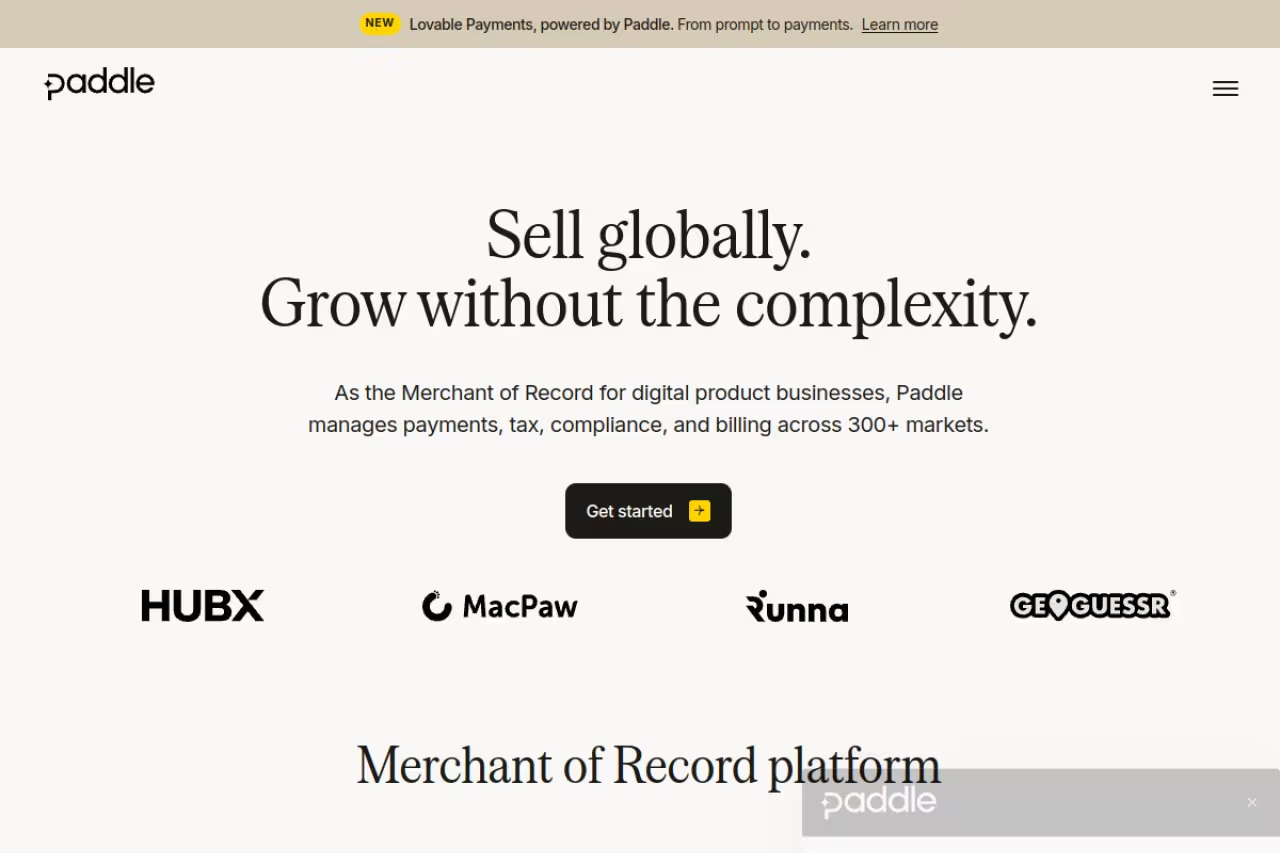
Paddle flips the model. Instead of being your processor, it becomes the legal seller of your product. That one distinction is why founders selling globally keep moving to it.
Who it's best for: SaaS and digital product companies scaling internationally, roughly in the $100k to $10M ARR range, that don't want a tax department.
Pick Paddle if you sell SaaS or digital products globally and don't want a tax department, since it handles tax, chargebacks and compliance as merchant of record. The 5% + 50 cents rate compounds as you grow.
5% + 50 cents per checkout transaction, with no monthly or migration fees, per Paddle's pricing page. Products under $10 or invoice-based deals need a custom quote. Yes, 5% is a lot more than Stripe's 2.9%. You're paying for what that extra covers.
The standout: as merchant of record, Paddle calculates, collects, and remits sales tax, VAT, and GST worldwide. It handles chargebacks, fraud, and most of the payment compliance headache. The math is simple: if registering for VAT across the EU and filing in dozens of jurisdictions would cost you more than the rate difference (and for most small teams it would), Paddle wins on total cost, not just sanity.
The catch: the 5% is real and it compounds as you grow. At high volume, a direct Stripe + Stripe Tax setup with a dedicated finance person eventually gets cheaper. Paddle is also opinionated about checkout, so you trade some design control for the convenience.
If you're building an AI product and weighing the whole stack, our guide to the best AI tools for startups pairs well with getting billing right early.
PayPal and Braintree: trust at the checkout
PayPal is two things. The button hundreds of millions of people already trust, and Braintree, the developer-facing gateway PayPal owns that competes more directly with Stripe.
Who it's best for: ecommerce stores where buyer trust moves the needle, and anyone who wants the PayPal button as a checkout option to reduce abandonment.
A good fit for ecommerce stores where buyer trust moves the needle, with Braintree adding a clean API at 2.89% + 29 cents. The trade-offs are legendary account holds and a consumer-side developer experience that lags well behind Stripe.
PayPal Checkout runs 3.49% + 49 cents per transaction, with standard card payments through it closer to 2.99% + 49 cents, according to PayPal's published merchant fees. Braintree comes in slightly under Stripe at 2.89% + 29 cents, with custom rates available above $100k a month.
The standout: reach and recognition. Offering PayPal at checkout demonstrably lifts conversion for consumer purchases because buyers don't have to type a card number. Braintree gives you that plus a clean API and native PayPal, Venmo, and card support in one integration.
Where it falls short: PayPal's account holds and freezes are legendary, and dispute resolution can feel stacked against the merchant. The higher per-transaction fee adds up, and the developer experience on the consumer PayPal side lags well behind Stripe.
Checkout.com: enterprise authorization rates
Checkout.com is the quiet competitor to Adyen, focused on global enterprises that care about squeezing every basis point of authorization rate.
Who it's best for: mid-market and enterprise companies processing across many regions that want interchange++ transparency and direct acquiring relationships.
Aimed at mid-market and enterprise companies chasing every basis point of authorization rate across many regions. There is no self-serve tier worth using, so expect a sales-led contract and a real integration project.
flat-rate clients see roughly 2.90% + 20 cents for non-European cards and under 1% for European ones. Enterprise merchants move to interchange++ with a markup of about 0.10% to 0.40% plus 8 cents, based on reported Checkout.com pricing. They don't publish rates publicly, so you negotiate.
The standout: authorization performance. Like Adyen, Checkout.com optimizes routing to lift the percentage of payments that actually go through, which at scale is worth far more than a fractional fee difference.
The catch: there's no self-serve tier worth using. This is a sales-led, contract-driven platform, so it's not where a side project starts. Expect onboarding, account managers, and a real integration project.
Lemon Squeezy: the indie maker's shortcut
Lemon Squeezy is the merchant of record built for people who want to launch this afternoon. Stripe acquired it in 2024, and as of 2026 it still runs while Stripe builds Managed Payments alongside it.
Who it's best for: solo developers and indie hackers selling digital downloads, licenses, or simple subscriptions who value speed over flexibility.
The indie maker's shortcut: a merchant of record you can have live in under an hour, with tax covered in 135+ countries. The catch is an uncertain roadmap after Stripe's acquisition, plus add-on fees that can push the 5% + 50 cents rate past Paddle's.
5% + 50 cents per transaction, no monthly fee, per Lemon Squeezy's pricing. Watch the add-ons though: international transactions add 1.5%, PayPal adds 1.5%, and subscriptions add 0.5%, so your effective rate can climb past Paddle's.
The standout: it's the fastest path to selling globally with tax handled. As merchant of record, it covers sales tax and VAT in 135+ countries, and you can have a store live in under an hour.
Where it falls short: the Stripe acquisition put the roadmap in question. Stripe is steering merchants toward its own Managed Payments product (priced identically at 5% + 50 cents), so the long-term future of Lemon Squeezy as a standalone tool is uncertain. Some makers have started looking at alternatives for that reason alone.
Square: payments plus a register
Square earns its place when your business straddles the physical and digital. The same account runs your in-person register and your online checkout.
Who it's best for: retailers, restaurants, and service businesses that sell in person and online and want one system for both.
A good call for retailers, restaurants and service businesses selling in person and online on one system. The online hike to 3.3% + 30 cents on the Free plan and thinner developer tooling make it a weaker choice if you're purely online.
here's the gotcha. Starting January 13, 2026, Square raised online rates for Free plan users from 2.9% + 30 cents to 3.3% + 30 cents, a 14% jump confirmed in Square's 2026 fee changes. You get back to 2.9% + 30 cents only on the paid Plus or Premium plans. In-person rates are separate.
The standout: the all-in-one hardware and software stack. Card readers, a POS, inventory, and online payments under one roof, with no monthly fee to start.
The catch: that recent online price hike makes Square's pure-online economics less attractive than they were, and the developer tooling is thinner than Stripe or Braintree. If you're purely online, you can do better.
Authorize.net: the dependable veteran
Authorize.net has processed payments since the 1990s and still powers a lot of established US businesses. It's not exciting, and that's the point.
Who it's best for: US businesses that already have a merchant account and want a stable, proven gateway bolted on, or those who prefer the predictability of a monthly fee.
The dependable veteran for US businesses that already have a merchant account or prefer a predictable monthly fee. It works with older carts and accounting systems, but the interface feels its age and a $25 monthly gateway fee applies.
the all-in-one plan is 2.9% + 30 cents per transaction plus a $25 monthly gateway fee. The gateway-only plan drops to 10 cents per transaction plus the $25 monthly fee and a small daily batch fee, letting you bring your own merchant account.
The standout: longevity and compatibility. It integrates with a huge range of older shopping carts and accounting systems, and it rarely surprises you.
Where it falls short: the interface and developer experience feel their age. For a new build in 2026, you'd reach for Stripe or Braintree first. Authorize.net makes the most sense when you've inherited it or need that specific legacy compatibility.
How to choose
Skip the rate comparison until last. It rarely decides anything.
Start with one question: do you want to be the legal seller of your product? If you sell digital goods or SaaS internationally and the answer is no, pick a merchant of record. Paddle for scaling companies, Lemon Squeezy for indie speed. The 5% buys you out of global tax compliance, and for most small teams that's the cheapest option once you price your own time.
If you do want control, or you sell physical goods, you're choosing a processor. Then volume decides. Under roughly $50k a month, Stripe's flat rate and unmatched developer experience win. Above that, especially across regions, interchange++ from Adyen or Checkout.com starts beating flat pricing, and the authorization gains compound.
Layer PayPal as a checkout option almost regardless of your primary gateway, since the trust it adds usually pays for the higher fee. And if you run a register and a website, Square's combined stack is worth the trade-offs.
One more practical note: test the failure paths before you commit. Run a declined card, a refund, a chargeback, and an international payment in sandbox. The gateway that handles those gracefully is the one you'll be glad you picked when it's not 2pm anymore.
If you're standing up a new product and want the rest of your stack sorted too, the Dupple X bundle covers the AI tools founders actually use, and our top tools directory is a good next stop. You can start a Dupple X trial and skip the research on the rest.
FAQ
What is the best payment gateway for a SaaS startup?
For most SaaS startups selling globally, a merchant of record like Paddle is the best starting point because it handles sales tax, VAT, and GST for you. If you have engineering resources and want full control over billing, Stripe paired with Stripe Tax is the strongest alternative. The deciding factor is whether you'd rather pay roughly 5% to outsource tax compliance or 2.9% and manage it yourself.
What's the difference between a payment gateway and a merchant of record?
A payment gateway like Stripe or Adyen processes the transaction but leaves you legally responsible for collecting and remitting taxes everywhere you sell. A merchant of record like Paddle or Lemon Squeezy becomes the legal seller, taking on tax compliance, chargebacks, and most payment liability in exchange for a higher percentage fee. The trade-off is cost versus operational burden.
How much do payment gateways charge per transaction?
Most US flat-rate gateways charge around 2.9% + 30 cents per online card transaction, including Stripe and Braintree (2.89% + 29 cents). Merchant of record platforms charge more, around 5% + 50 cents, because they absorb tax and compliance work. High-volume gateways like Adyen and Checkout.com use interchange++ pricing, which can be cheaper at scale but harder to predict.
Which payment gateway has the lowest fees?
At low volume, flat-rate processors like Stripe and Braintree are hard to beat. At high volume, interchange++ pricing from Adyen or Checkout.com usually wins because you pay the true network cost plus a small markup instead of a fixed 2.9%. The lowest headline rate rarely equals the lowest total cost once you factor in international fees, chargebacks, and tax handling.
Is Stripe still the best payment gateway in 2026?
Stripe remains the best default for developers and custom builds thanks to its API, documentation, and ecosystem. It's not automatically the best for everyone, though. If you sell internationally and want tax handled, a merchant of record beats it on total effort. If you process large global volume, Adyen or Checkout.com can be cheaper. Stripe wins on flexibility, not on every metric.
Related guides
Some offers on this page may be paid placements or contain affiliate links.
