
The channel 930K+ pros actually read
Native placements across six vertical newsletters. Developers, founders, executives and marketers who don't scroll LinkedIn but never miss their inbox.
53%
Manager level+
37%
Open rate
1-2%
Avg. CTR
Start a conversation
Tell us your goals. A real person replies with a tailored plan and benchmarks for your category, and the media kit lands in your inbox right away.
Join the advertisers reaching 930,000+ tech professionals in their inbox

 24 ads
 21 ads
 6 ads
6 ads

 2 ads
2 ads
 19 ads
 3 ads
3 ads
 1 ad
1 ad
 3 ads
3 ads
 15 ads

 5 ads
24 ads
21 ads
6 ads
2 ads
19 ads
3 ads
1 ad
3 ads
15 ads
5 ads
5 ads
24 ads
21 ads
6 ads
2 ads
19 ads
3 ads
1 ad
3 ads
15 ads
5 ads
What partners say
In their words
The teams advertising with us tend to come back. Here's why.
Sponsoring Techpresso has been one of the smoothest partnerships we've run - and one of the best performing. From the first campaign onward, the team made every step easy and convenient, and the results consistently justified coming back. Top-notch to work with.


1,499 unique clicks from one Primary ad.
We ran a time-sensitive campaign for a very specific audience, and Techpresso delivered above their expected ranges across every placement. They were also incredibly responsive and got us live quickly, which was critical for the timeline we were working on.

3,700 clicks across the campaign.
Our audiences
6 newsletters. One platform.
Each newsletter targets a specific vertical with engaged, opt-in subscribers who open and click.

Techpresso
Daily AI and tech briefing. Our flagship.
780K+
Subscribers
37%
Open rate

Cyberpresso
Cybersecurity threats, tools, and intelligence.
26K+
Subscribers
30%
Open rate

MarketingShot
Marketing trends, strategies, and growth.
35K+
Subscribers
32%
Open rate

Devshot
Developer news, frameworks, open source.
28K+
Subscribers
32%
Open rate

Finpresso
Tech stocks, fintech, deals and markets.
29K+
Subscribers
33%
Open rate

AIpresso
The most important AI news, models and tools.
25K+
Subscribers
31%
Open rate
Who reads us
Decision-makers, not casual browsers
53% are manager level or above. 84% based in the US. The people who sign off on purchases.
Seniority
Function
Company size
How it works
Live in 48 hours
No back-and-forth. No creative headaches. We handle everything.
Tell us your goals
Brand awareness, leads, traffic, or pipeline. Share your landing page and target audience. We'll recommend the right format and newsletter.
We place it natively
Your creative goes into the newsletter’s own layout: co-branded header, full-sized image, trackable links. You review it before it ships.
Campaign goes live
Your ad goes live within 48 hours of your approval. You get a full report: opens, clicks, CTR, benchmarks, and the corporate domains that engaged.
Ad formats
Pick what fits your goals
Every format is native to the newsletter. No banners, no pop-ups. Just content your audience wants to read.
What it looks like
Your ad, in the middle of the read. Not next to it.
Co-branded header, your image, your copy in the newsletter’s own layout. Readers finish it because it doesn’t read like an ad.
Primary ad
Best sellerFirst placement in the newsletter. Co-branded "Together with" header featuring your logo, a full-sized image, editorial copy, and up to 2 trackable links.
Spotlight ad
Second placement between the main section and "Other news." Full-sized image, native editorial copy, and one trackable link.
Dedicated send
A standalone email sent exclusively to our full subscriber base. Your branding, your messaging, your CTA only. Zero competition.
Lead generation
We promote you in our post-signup flow to 1,500-2,000 new subscribers daily. CPC or CPL pricing. Ideal for guides and whitepapers.
Native advertorial
Looks like content. Reads like a recommendation. A long-form sponsored piece published inside the newsletter, in its editorial format.
Backlink placement
Your brand mentioned naturally in our articles. Permanent, indexed by Google, and discoverable via AI search engines like ChatGPT and Gemini.
Rates
What advertising costs
Published prices in US dollars, per placement. Maximum 3 sponsors per issue. Live within 48 hours of approval. Main placements book out weeks to months ahead.
| Placement | Price | Unique clicks (media kit range) |
|---|---|---|
| Primary Ad | $4,000 per placement | 600 to 1,500 unique clicks |
| Spotlight Ad | $1,300 per placement | 200 to 300 unique clicks |
| Quick Link | $500 per link | 50 to 100 unique clicks |
| Dedicated Send | $24,000 per send | 1,000 to 3,000 unique clicks |
| Lead Generation | CPC or CPL, on a performance basis | Quoted per campaign |
| Pack | Price | Includes |
|---|---|---|
| Starter | $16,000 | 4 Primary Ads and 2 Spotlight Ads |
| Growth | $32,000 | 8 Primary Ads and 6 Spotlight Ads |
| Scale | $48,000 | 12 Primary Ads and 10 Spotlight Ads |
| Package | Price |
|---|---|
| 6 Primary Ads, Monday to Saturday, plus a Sunday send that is 100% your brand | $500 |
| a Dedicated Send, 100% your brand | $400 |
| 6 Primary Ads and 1 Dedicated Send, Monday to Sunday | $800 |
| 12 Primary Ads and 2 Dedicated Sends, 2 x Monday to Sunday | $1,500 |
Source: Dupple Media Kit 2026. The entry placement is $500 with no minimum budget. Lead Magnet, Native Advertorial, Sponsored Webinar, Content Re-run and Retargeting Sequence are quoted per campaign and are not on the public rate card. Click ranges are the media kit's expected unique clicks per placement, not a guarantee.
See it in the inbox
What your ad actually looks like
Real placements from Techpresso. Your logo, your image, your copy, laid out in the newsletter's own format.
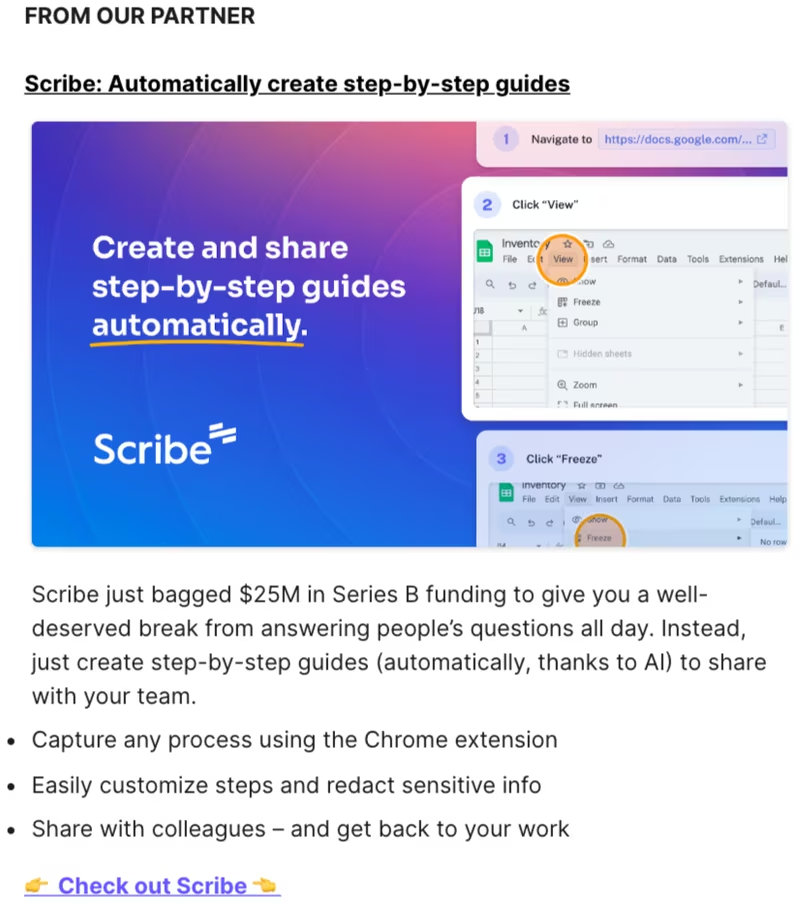
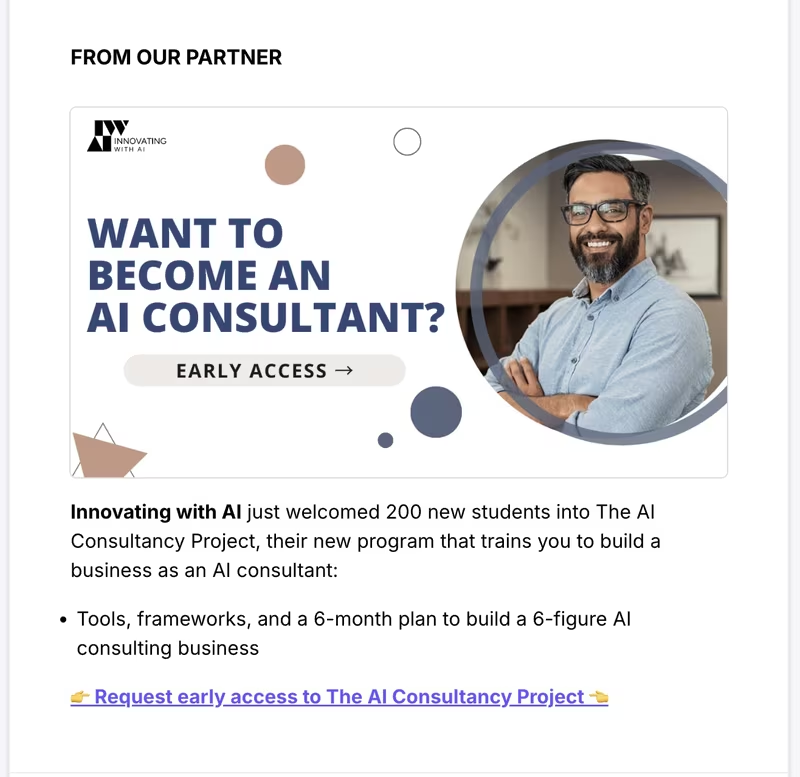
- Top of the newsletter
- Co-branded header + your logo
- Up to 2 trackable links
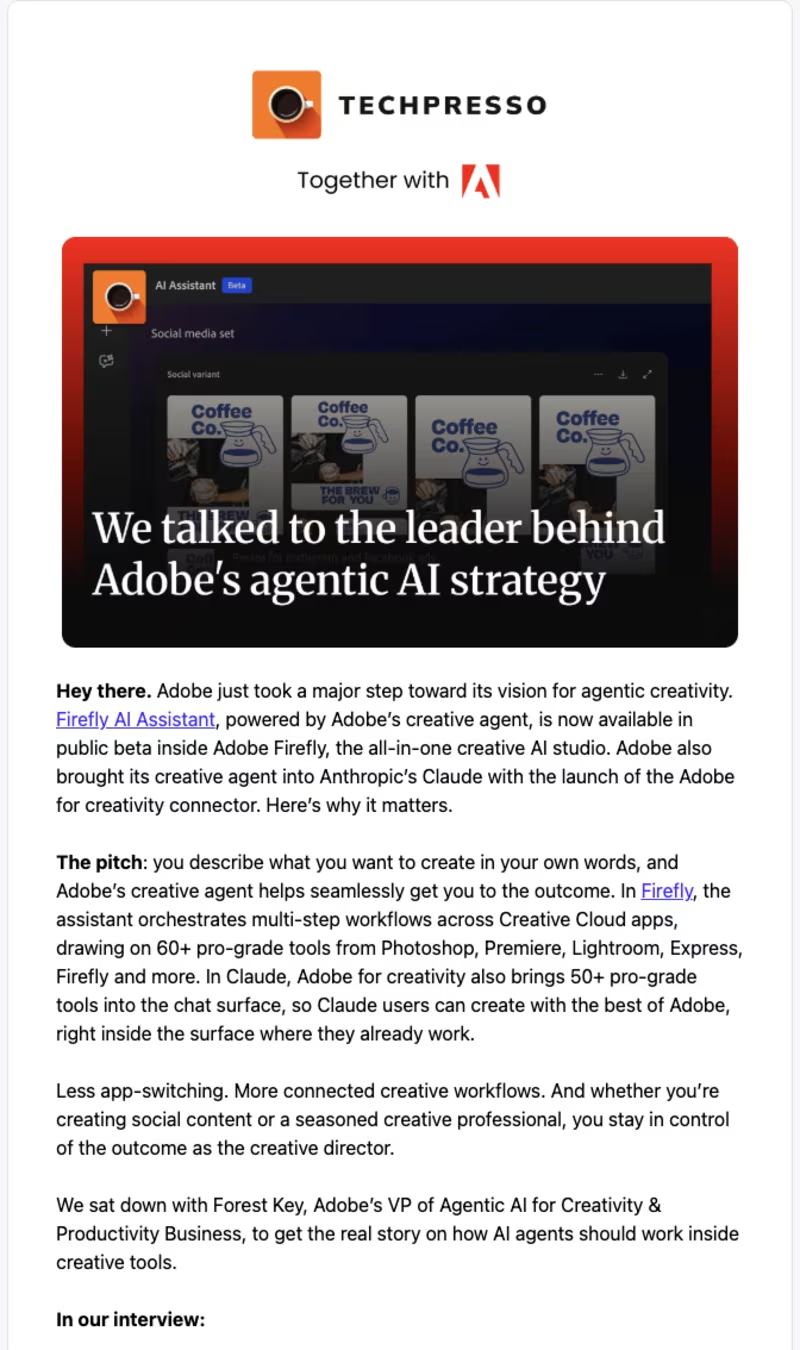
- Middle of the newsletter
- Full-sized image + native copy
- 1 trackable link
- A solo email, no other advertiser
- Your branding end to end
- Unlimited links
Dupple vs. alternatives
Not another ad auction
LinkedIn and Meta sell impressions. We deliver attention from people who opted in to hear about products like yours.
| LinkedIn Ads | Meta Ads |  Dupple newsletters Dupple newsletters |
|
|---|---|---|---|
| Pricing | Auction-based, unpredictable | Auction-based, cheap but low-quality | Fixed, transparent, upfront |
| Attention | Passive feed scroll, algorithm decides visibility | Personal feed, competes with entertainment | 30% to 37% open rate across the six newsletters. Opted-in, professional context |
| Competition | Unlimited ads bidding on same audience | Unlimited ads in feed | Max 3 sponsors per issue. Guaranteed share of voice |
| Audience | Broad, diluted professional targeting | B2C primarily, outdated profile data | 53% manager level and above. The people who sign off |
| Creative | You design everything | You design everything | Native layout, no ad design needed |
| Reporting | Platform metrics only | Platform metrics only | Opens, clicks, CTR + corporate domains that clicked |
Why Dupple
Built for performance, not vanity metrics
We limit the number of advertisers to protect reader experience and your results.
High-intent audience
Our readers are decision-makers who actively research tools and solutions. They open, they click, they convert.
Limited ad slots
Maximum 3 sponsors per newsletter. Your message doesn't compete with a wall of ads.
Live in 48 hours
Send your creative and links. After you approve the copy, your ad goes live within 48 hours. Primary Ads and Dedicated Sends book out weeks to months ahead, so send your preferred dates and we reply within 24 hours. A dedicated account manager runs the campaign end to end.
Full transparency
Detailed performance report after every campaign: opens, clicks, CTR, benchmarks, and corporate domains that clicked.
Pick your audience
Dedicated pages per newsletter
Detailed audience demographics, ad formats, and pricing for each of our 6 newsletters.
 Techpresso
Daily AI & tech briefing. Engineers, founders, and operators read it with their morning coffee.
780K+
Subscribers
37%
Open rate
 MarketingShot
Growth marketers, CMOs, demand gen, and RevOps.
35K+
Subscribers
32%
Open rate
By industry →
SaaS, Fintech, Cybersecurity, Devtools, Martech, cross-newsletter targeting by vertical.
5
Industry pages
 Finpresso
Finance, fintech, treasury, and VC. Markets and the models that move money.
29K+
Subscribers
33%
Open rate
 Devshot
Developers, platform teams, and devtools. Frameworks, open source, and the tools engineers buy.
28K+
Subscribers
32%
Open rate
 Cyberpresso
Cybersecurity for CISOs, SecOps, and GRC. Threats, tools, and intelligence for security buyers.
26K+
Subscribers
30%
Open rate
 AIpresso
The free daily AI brief: the models, tools and research that matter, distilled into five minutes every morning.
25K+
Subscribers
31%
Open rate
By reader persona
Advertise to a specific audience
Target by who reads us, not just which newsletter.
Software developers
Engineers to CTOs, the largest reader function on the network.
Founders & executives
The people who set budgets and decide what gets bought.
Marketers
Growth operators and CMOs, plus the dedicated MarketingShot list.
Security leaders
CISOs, SecOps and compliance, through Cyberpresso.
Investors & fintech
Active investors, analysts and the operators building fintech.
Data & AI
ML engineers and the teams shipping AI to production.
Learn more
Advertiser guides
Deep-dives on pricing, measurement, and lead gen for B2B newsletter sponsorship.
Research
Techpresso Trends, May 2026
An illustrative look at the story themes in Techpresso in May 2026, and what to book around them.
Pricing
Newsletter advertising rates 2026
Industry CPM and flat-rate benchmarks, with the Dupple rate card alongside.
Measurement
Measure sponsorship ROI
Attribution frameworks, benchmarks, and what to ask publishers.
Examples
Newsletter ad examples
12 real B2B campaigns: the copy, the format, and what worked or flopped.
Demand gen
B2B tech lead generation
The channels that still convert in 2026 + budget splits.
Qualification
Qualified B2B SaaS leads
Signal-based qualification frameworks that predict conversion.
Playbook
Newsletter lead gen playbook
Ad formats, landing pages, and 48-hour campaign launches.
Platforms
Newsletter ad platforms compared
Paved, SparkLoop, Beehiiv Boost and the networks, side by side for B2B.
Guide
B2B newsletter advertising
Formats, pricing, targeting and measurement for B2B tech buyers.
Buyer guide
Email newsletter advertising
What to check before you buy a sponsorship: formats, CPMs and ROI.
See it in action
Full case studies
Complete breakdowns of past campaigns with impressions, CPC, CPM, and corporate-domain engagement.
Ready to reach our network of 930K+ professionals?
Fill out the form above and we'll email you our media kit, rates, specs, and case studies.
Get started