

Last updated: May 2026
What Is SMTP2GO?
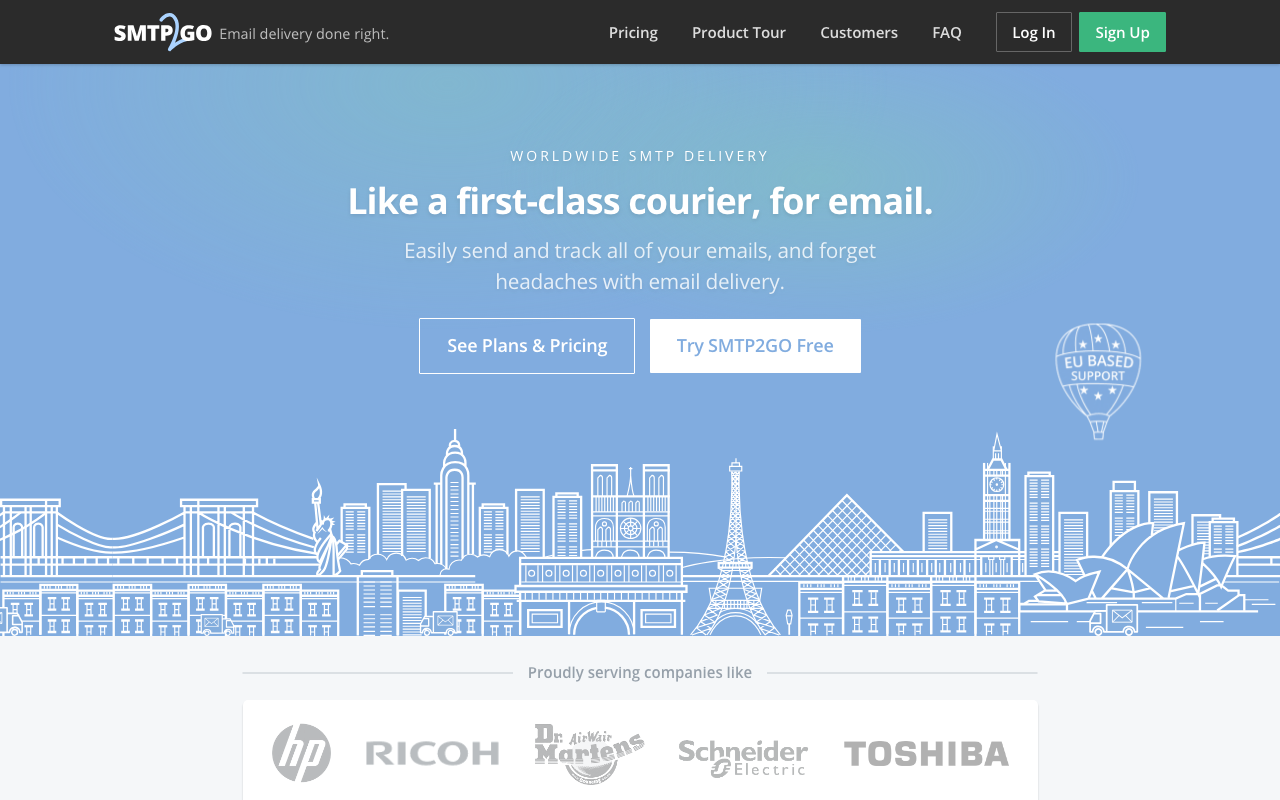
SMTP2GO is the transactional email delivery service for applications, websites, and SaaS platforms. Founded in 2006 in New Zealand, SMTP2GO has quietly become one of the more reliable email infrastructure providers in the SMB and mid-market space, serving over 100,000 customers globally.
The pitch is straightforward email delivery. Applications need to send password resets, order confirmations, notifications, and other transactional emails. Doing this through Gmail SMTP or shared hosting works until your sender reputation collapses. SMTP2GO handles deliverability, retries, bounce processing, and webhook events as a service.
The product competes with SendGrid, Postmark, Mailgun, and Amazon SES. SMTP2GO positions on simplicity, generous free tier, and reliable deliverability without the complexity of bigger competitors. Most customers find configuration simpler than SendGrid and pricing more predictable than Amazon SES.
Try SMTP2GO FreeHow SMTP2GO Works
Sign up and verify your sending domain by adding DKIM, SPF, and DMARC records. The platform walks you through DNS configuration with copy-paste records. Verification takes 5-30 minutes for most domains.
Send emails through SMTP relay (any application supporting SMTP can send through SMTP2GO with credentials) or REST API for higher-volume programmatic sending. The platform handles connection pooling, retries, and rate limiting automatically.
Bounce, spam, and unsubscribe handling happens automatically. Bounced addresses move to a suppression list to protect your sender reputation. Webhooks notify your application of events (delivered, opened, clicked, bounced) so you can react in real time.
Analytics show delivery rates, bounce rates, complaint rates, and engagement metrics by sender, recipient domain, and time period. Dashboards help diagnose deliverability issues by identifying problem domains.
Dedicated IP addresses available for high-volume senders who want to control their own sender reputation rather than sharing pooled IPs. Custom IP costs more but isolates your reputation from other senders.
SMTP2GO Pricing in 2026
Free: 1,000 emails/month, all features. Genuinely useful free tier.
Starter: $15/month annually. 10,000 emails/month, basic features.
Professional: $35/month annually. 30,000 emails/month, advanced features.
Premier: $69/month annually. 100,000 emails/month, dedicated IP option.
Enterprise: Custom pricing for high volume.
Compared to SendGrid Essentials at $19.95/month for 50,000 emails, SMTP2GO is similar at the low end but cheaper at scale. Amazon SES is cheapest at $0.10 per 1,000 emails but requires more configuration.
See SMTP2GO PlansWhere SMTP2GO Wins
- Generous free tier: 1,000 emails/month free works for small apps and side projects.
- Strong deliverability: well-managed shared IPs, mature reputation.
- Simple setup: SMTP credentials work with any application.
- Predictable pricing: tier-based, no surprise bills.
- Webhooks on all plans: event tracking works from day one.
Where It Falls Short
- Less brand recognition than SendGrid: less common in procurement processes.
- UI feels older: works well but visually behind newer competitors.
- Marketing email less suited: focus is transactional; bulk marketing better served by Mailchimp or others.
- Advanced template features lighter: dynamic content less mature than Postmark or SendGrid.
SMTP2GO vs SendGrid vs Postmark vs Mailgun
Postmark targets pure transactional email with fastest delivery and best deliverability. More expensive, narrower focus.
SendGrid handles both transactional and marketing. Larger feature set, more complexity.
Mailgun is developer-focused with strong API documentation.
Amazon SES is cheapest at scale but requires more setup and offers less hand-holding.
Who Should Use SMTP2GO
SaaS applications sending transactional email: password resets, notifications, order confirmations.
Side projects and indie developers: free tier covers most low-volume needs.
SMBs migrating off Gmail SMTP: sender reputation suffers when sending through Gmail; SMTP2GO fixes this.
Skip it if: you need marketing email features (use Mailchimp), require enterprise-grade dedicated infrastructure (use SendGrid Pro), or want the absolute cheapest option (use SES).
Frequently Asked Questions
Is the free tier really free?
Yes. 1,000 emails/month free permanently.
Does it support custom domains?
Yes. Verify your domain by adding DNS records.
Can I use it with WordPress?
Yes via SMTP plugins like WP Mail SMTP. Configure SMTP2GO credentials, send all WordPress emails through it.
What is the API like?
RESTful, documented, supports JSON and form-encoded requests. Common languages have SDKs.
Are dedicated IPs available?
Yes on Premier and Enterprise tiers. Cost varies by region and volume.