
Unclaimed Property Reporting 2026: A Complete Guide to Escheatment Compliance

Key factsBusinesses must escheat unclaimed property to the state once dormancy periods expire
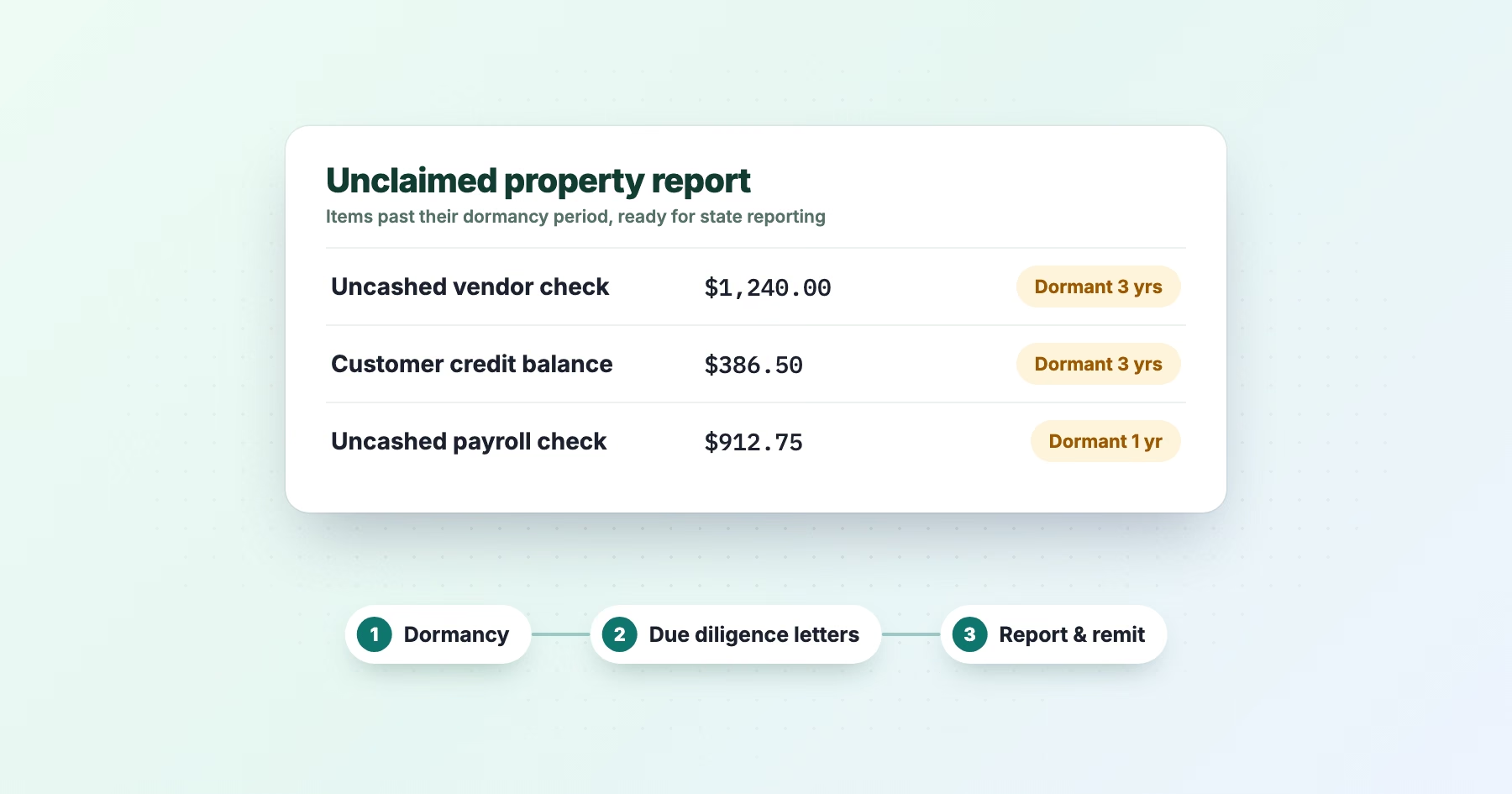
- Escheatment is the legal transfer of dormant unclaimed property, like uncashed checks, to the state where the owner was last known to reside.
- Dormancy periods vary by state and property type, from one year for payroll checks to three to five years for vendor checks.
- Most states require a due diligence letter mailed to the owner's last known address 60 to 180 days before the reporting deadline.
- Unclaimed property audits can look back 10 or more years and are often run by third-party firms paid on contingency.
- Voluntary Disclosure Agreements let non-compliant holders reduce or waive penalties and interest by coming into compliance before an audit.
Almost every business holds unclaimed property without realizing it, an uncashed payroll check, a stale vendor payment, a customer credit that was never used. When that property sits untouched long enough, you're legally required to turn it over to the state through a process called escheatment. Get it wrong and you're exposed to audits, interest, and penalties. Here's how unclaimed property reporting works in 2026 and how to stay compliant.
What is unclaimed property (and escheatment)?
Unclaimed property is any financial asset a business holds that belongs to someone else and has gone dormant (no contact, no activity) for a defined period. Common examples:
- Uncashed payroll and commission checks
- Outstanding vendor and refund checks
- Unused customer credits, gift balances, and rebates
- Unclaimed insurance and benefit payments
Escheatment is the legal transfer of that property to the state once the dormancy period passes. The state then holds it for the owner. You, the "holder," are responsible for identifying, reporting, and remitting it, for every state where your owners were last known to reside, not just your home state.
Step 1: Know your dormancy periods
Dormancy periods vary by state and property type, typically ranging from one to five years. As a rough guide:
- Uncashed payroll: often 1 year
- Vendor checks and customer credits: commonly 3 to 5 years, depending on the state
Because you may hold property tied to owners in many states, you're effectively managing dozens of different dormancy rules at once, which is why manual tracking breaks down quickly.
Step 2: Perform due diligence (this is where audits focus)
Before you can escheat property, most states require you to make a genuine attempt to reunite it with its owner, a due diligence letter mailed to the owner's last known address, typically 60 to 180 days before the reporting deadline.
In 2026, states are enforcing this harder. Some mandate specific wording, headings, and timing in the letter, and auditors increasingly ask for copies of the letters and proof they were mailed. "We sent something" is no longer enough; you need a defensible, documented process.
Step 3: File your reports (watch the deadlines)
After due diligence, you report and remit the remaining unclaimed property to each state. Most states cluster their deadlines in late October and early November for property that became reportable during the prior fiscal year, but "fall filing" and "spring filing" states differ, and exact dates vary. Filing in the wrong window is a common, avoidable mistake.
Reports must generally be filed in the NAUPA standard format, with property coded correctly by type, another place where manual spreadsheets go sideways.
Step 4: Keep audit-ready records
Unclaimed property audits can look back 10+ years, and they're often run by third-party firms paid on contingency, meaning they're motivated to find liability. Your best defense is documentation: dormancy tracking, dated due diligence letters with proof of mailing, and a clear record of what was reported where.
Why this gets hard fast
Three things make unclaimed property uniquely painful:
- Multi-state complexity, different dormancy periods, letter rules, formats, and deadlines in every state.
- Rising enforcement, stricter due diligence standards and aggressive contingency audits in 2026.
- It's nobody's full-time job, it usually falls to finance or accounting as a once-a-year scramble, which is exactly when errors creep in.
The simpler path
Rather than tracking 50 states' rules in a spreadsheet, a dedicated tool centralizes dormancy tracking, generates compliant due diligence letters with mailing records, formats reports to each state's requirements, and keeps everything audit-ready. ReportMyUP is built for exactly this, turning a multi-state, once-a-year fire drill into a managed, documented process.
FAQ
Which state do I report to? Generally the state of the owner's last known address. If that's unknown, it typically escheats to your state of incorporation. This is why holders end up filing in many states.
What if I've never filed and should have? Many states offer Voluntary Disclosure Agreements (VDAs) that reduce or waive penalties and interest in exchange for coming into compliance. Acting before an audit finds you is almost always cheaper.
Do small businesses have to comply? Yes. Unclaimed property obligations apply regardless of size, there's no small-business exemption for holding someone else's money.
How far back can an audit go? Frequently 10 years or more, and estimates can be applied where records are missing, which is why documentation matters so much.
ReportMyUP centralizes dormancy tracking, due diligence, and multi-state reporting so unclaimed property compliance stays organized and audit-ready.
Sources: Sales Tax Institute (dormancy, due diligence and escheatment); Sovos "Unclaimed Property Laws by State"; U.S. Bank escheatment reporting deadlines; 2026 state escheatment enforcement trends.
Some offers on this page may be paid placements or contain affiliate links.
