
Combined Federal/State Filing (CFSF) Program: 2026 Complete Guide
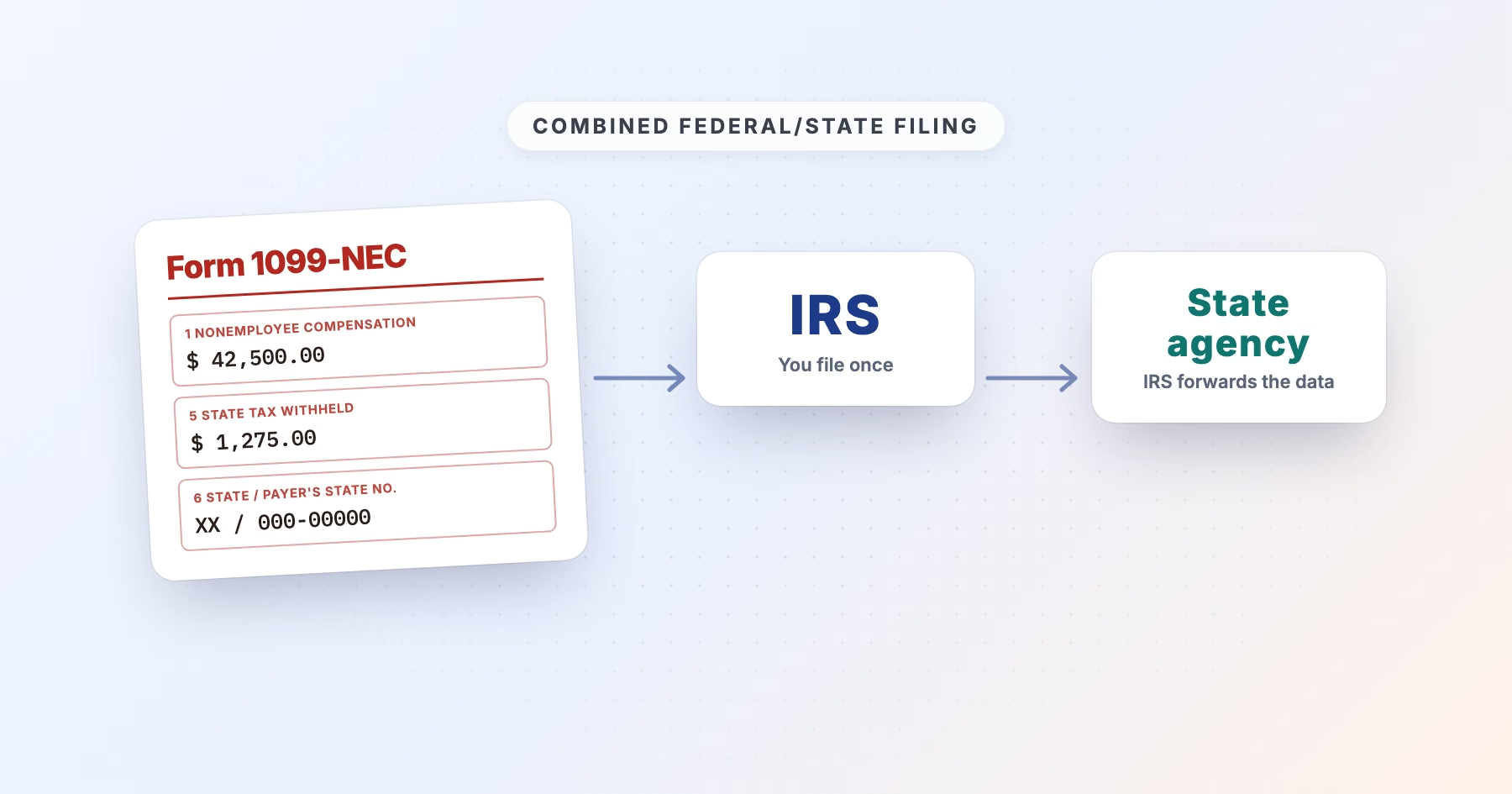

Key factsThe CF/SF program lets filers submit certain 1099 forms once through the IRS, which forwards…
- The CF/SF program lets filers submit certain 1099 forms once through the IRS, which forwards data to participating states free of charge.
- CF/SF covers 1099-NEC, 1099-MISC, 1099-INT, 1099-DIV, 1099-R, 1099-K, and 1099-B, though coverage can vary by form and state.
- CF/SF does not guarantee full state compliance: some participating states still require a direct filing in addition to CF/SF.
- IRIS becomes the IRS's sole intake system for filing starting with tax year 2026, replacing the legacy FIRE system.
Filing 1099s with the IRS is one obligation. Filing them with your states is another, and doing it state by state is where a lot of businesses lose days every January. The IRS Combined Federal/State Filing (CF/SF) program exists to collapse that work into a single submission. Here's how it actually works in 2026, what it covers, and the traps that catch filers who assume it covers everything.
What the CF/SF program is
CF/SF is an IRS program that lets you file certain information returns once with the IRS, which then forwards the relevant data to participating states on your behalf, free of charge for approved filers. Instead of transmitting the same 1099s separately to each state tax agency, you submit electronically through the IRS (via the FIRE system, and now IRIS), flag the state, and the IRS handles the hand-off.
For a business filing in multiple states, that's the difference between one submission and a dozen.
Which forms are covered
CF/SF supports most of the common 1099 series, including:
- 1099-NEC
- 1099-MISC
- 1099-INT
- 1099-DIV
- 1099-R
- 1099-K
- 1099-B
(Coverage can vary by form and state, so always confirm for your specific mix.)
Which states participate in 2026
The following states currently participate in CF/SF:
AL, AR, AZ, CA, CO, CT, DC, DE, GA, HI, ID, IN, KS, LA, ME, MD, MA, MI, MN, MS, MT, NE, NJ, NM, NC, ND, OH, OK, PA, RI, SC, and WI.
Important: states join and withdraw from the program every year, so this list is a snapshot, not a guarantee. Always verify the current year's participants before you rely on CF/SF for a given state.
The traps: what CF/SF does not do
This is where compliance goes wrong. CF/SF is genuinely useful, but it is not a complete state-filing solution:
- Not every state participates. States that aren't in the program require direct filing (or have no 1099 requirement at all).
- Some participating states still want a direct file. Even when a state is in CF/SF, it may require the same form be submitted directly to the state as well: CF/SF alone doesn't satisfy them.
- Some states have extra requirements CF/SF doesn't meet, additional forms, reconciliation returns, or specific thresholds.
- Requirements change annually. A state that was fully covered last year may add requirements this year.
Treating "I filed through CF/SF" as "I'm done with state filing" is one of the most common (and most expensive) assumptions in information reporting.
How to file through CF/SF
- Get set up to e-file with the IRS. You'll file electronically through the IRS system (FIRE historically; IRIS going forward, as IRIS becomes the sole intake system starting with tax year 2026).
- Format your file for CF/SF. Electronic files must include the correct state codes and follow IRS specifications (Publication 1220).
- Submit once; the IRS forwards to participating states.
- Fill the gaps directly. For non-participating states, and for participating states with extra requirements, file directly.
Because steps 2 and 4 are where errors happen, most high-volume filers use software that handles CF/SF formatting and flags the states that still need a direct file.
The simplest path to state compliance
A platform built for this removes the guesswork: it formats your CF/SF submission correctly, files with participating states through the program, and handles direct state filing where CF/SF isn't enough. 1099 Pro automates state compliance alongside federal e-filing, so you're not manually tracking which of 30-plus states are covered this year and which need a separate return.
FAQ
Is CF/SF free? Yes, for approved filers, the IRS forwards CF/SF data to participating states at no charge. Your only costs are your e-filing/software costs.
Does CF/SF cover recipient copies? No. CF/SF is about state agency filing. You still have to furnish copies to recipients separately.
If my state is in CF/SF, am I fully covered? Not necessarily. Some participating states still require a direct filing, and some have additional forms or thresholds. Always confirm your state's current requirements.
FIRE or IRIS, which do I use? FIRE is the legacy IRS system; IRIS is the replacement and becomes the only intake system beginning with the 2026 tax year (filing season 2027). Full-service software handles the transition for you.
1099 Pro automates federal and state 1099 compliance, including CF/SF formatting and direct state filing where the program falls short.
Sources: IRS Combined Federal/State Filing (CF/SF) program FAQs; IRS Topic no. 804; IRS Publication 1220.
Some offers on this page may be paid placements or contain affiliate links.
