
IRS TIN Matching Guide: How to Avoid B-Notices and Penalties in 2026
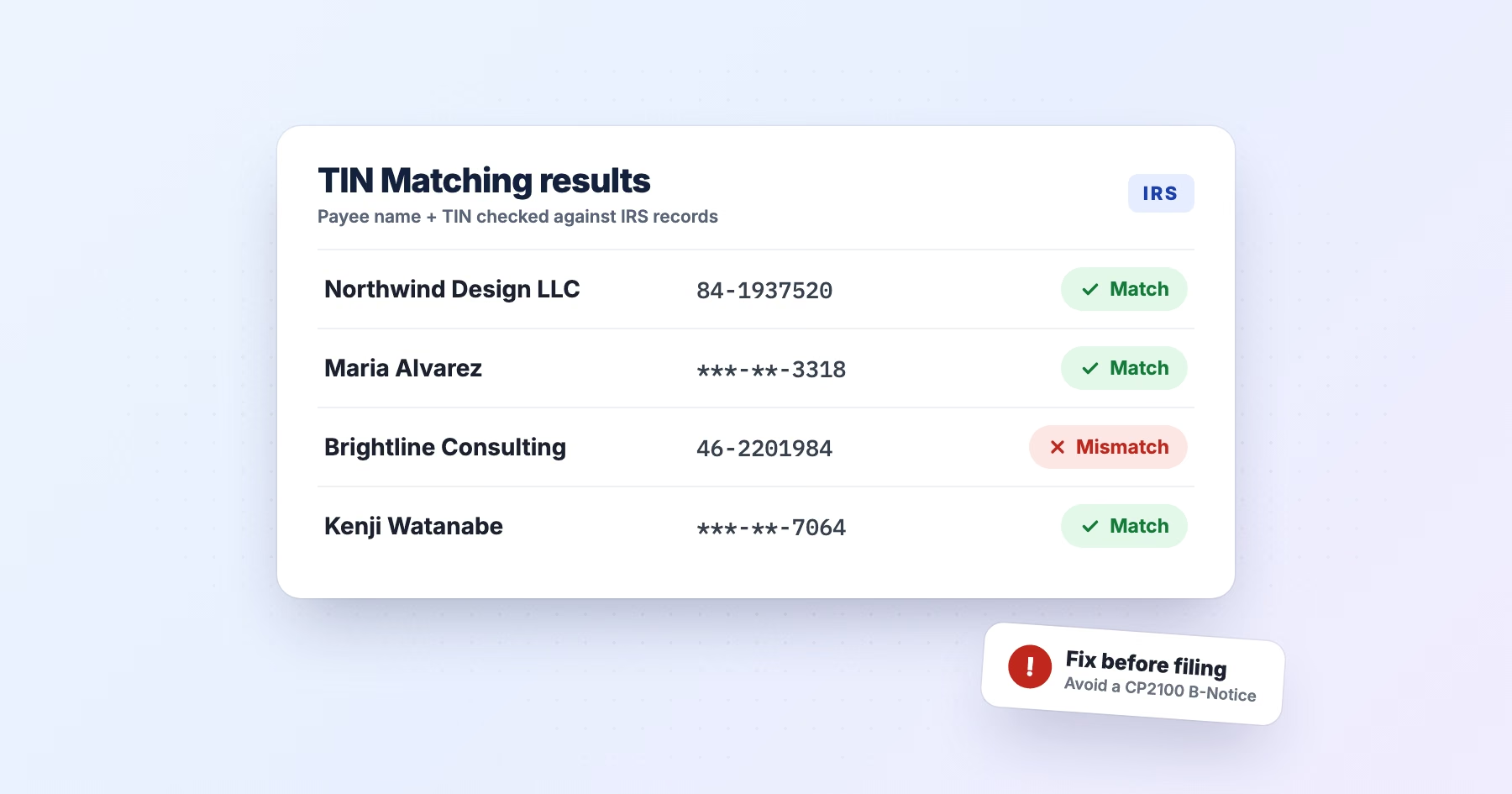

Key factsAvoid IRS B-notices and penalties in 2026 by TIN-matching before you file 1099s
- A CP2100 notice is sent if you filed 50 or more returns with TIN errors; a CP2100A is sent for fewer than 50.
- After a First B-Notice, send the payee a notice and W-9 within 15 business days, or begin backup withholding within 30 business days.
- Backup withholding is 24% of reportable payments and must stop within 30 calendar days once a valid TIN is provided.
- Incorrect information return penalties generally range from $60 to $660 per return, depending on how quickly they are corrected.
- A Second B-Notice requires the payee to validate their TIN directly with the SSA or IRS; a plain W-9 is not enough.
Most 1099 penalties don't come from filing late, they come from filing with a wrong name and TIN combination. When the name and Taxpayer Identification Number on your information return don't match IRS records, the IRS sends a notice, and you inherit a chain of deadlines, backup-withholding obligations, and per-form penalties. The fix is almost embarrassingly simple: verify TINs before you file. Here's how in 2026.
What TIN matching is
TIN matching is the process of confirming that a payee's name and TIN combination matches IRS records before you submit a 1099. A payee gives you their name and TIN on a Form W-9; TIN matching checks that pairing against the IRS database so you catch errors before they become notices.
The IRS offers a free TIN Matching service through its e-Services platform, but it's limited (batch and interactive lookups, with registration hurdles). Higher-volume filers typically use a dedicated tool that validates in bulk and checks beyond the IRS list.
What happens when a TIN doesn't match: the CP2100 "B-notice"
File a mismatch and the IRS sends a CP2100 or CP2100A notice, commonly called a "B-notice." You get:
- A CP2100 if you filed 50 or more returns with errors
- A CP2100A if you filed fewer than 50 with errors
Each notice starts a compliance clock.
The B-notice timeline (miss these and it gets worse)
- First B-Notice. The first time a payee appears on a CP2100/CP2100A, you must send them the First "B" Notice plus a Form W-9 within 15 business days of the notice date (or the date you received it). Date the notice no later than 30 business days out.
- Backup withholding. If the payee doesn't respond, you must begin backup withholding at 24% on future payments, no later than 30 business days after the notice.
- Stop when corrected. When the payee provides a valid TIN, you must stop backup withholding within 30 calendar days.
- Second B-Notice. If the same payee shows up again within a three-year period, you send a Second "B" Notice, and this time the payee must obtain validation directly from the SSA or IRS (a plain W-9 isn't enough).
The penalties
Beyond the administrative burden, incorrect information returns carry penalties that generally range from $60 to $660 per return, depending on how quickly (or whether) you correct them. Multiply that across a vendor file and a single bad data year gets expensive fast.
How to avoid all of it
Prevention is dramatically cheaper than response. Five practices that keep you off the CP2100 list:
- TIN match before every filing. Validate each name/TIN combination against IRS records before you submit. This single step prevents the majority of B-notices.
- Collect a W-9 up front, and refresh it. Get a W-9 before you pay a vendor, and request an updated one annually or whenever a name or ownership changes.
- Keep records exact. Your system's name and TIN must match the W-9 character-for-character. "DBA" names and legal entity names are a frequent source of mismatches.
- Make the required TIN requests. To avoid the missing-TIN penalty, make up to three documented requests (initial, first annual, second annual).
- Document everything. Keep dated records of W-9 collection and TIN validation, your defense if the IRS questions "reasonable cause."
The fastest way to check TINs at scale
The IRS e-Services tool works, but it's clunky for volume and doesn't cover everything you'd want to verify. A dedicated service validates name/TIN combinations in real time and in bulk, so you can clean a vendor file before filing season instead of reacting to notices after. TINCheck runs real-time TIN matching (plus additional identity and compliance checks) so you catch mismatches before the IRS does, turning B-notice prevention into a routine, one-click step.
FAQ
When should I run TIN matching? Ideally at onboarding (when you collect the W-9) and again before filing. Catching a mismatch in January is fine; catching it before you ever pay the vendor is better.
What's the backup withholding rate? 24% of reportable payments, applied when a payee fails to furnish a valid TIN or is flagged by the IRS.
Do I have to withhold immediately when I get a CP2100? You must begin backup withholding no later than 30 business days after the notice if the payee doesn't respond to your First B-Notice, and stop within 30 calendar days once they provide a valid TIN.
Can TIN matching prevent every notice? Not literally every one, but it prevents the large majority, because most CP2100 notices stem from exactly the mismatches TIN matching catches. It's the highest-leverage prevention step available.
TINCheck provides real-time, bulk TIN matching and identity verification, so you catch name/TIN mismatches before they turn into CP2100 notices, backup withholding, and penalties.
Sources: IRS "Understanding your CP2100 or CP2100A Notice"; IRS Backup Withholding "B" Program; IRS Publication 1281.
Some offers on this page may be paid placements or contain affiliate links.
