Last updated: January 2026
What Is NexGen Technologies?
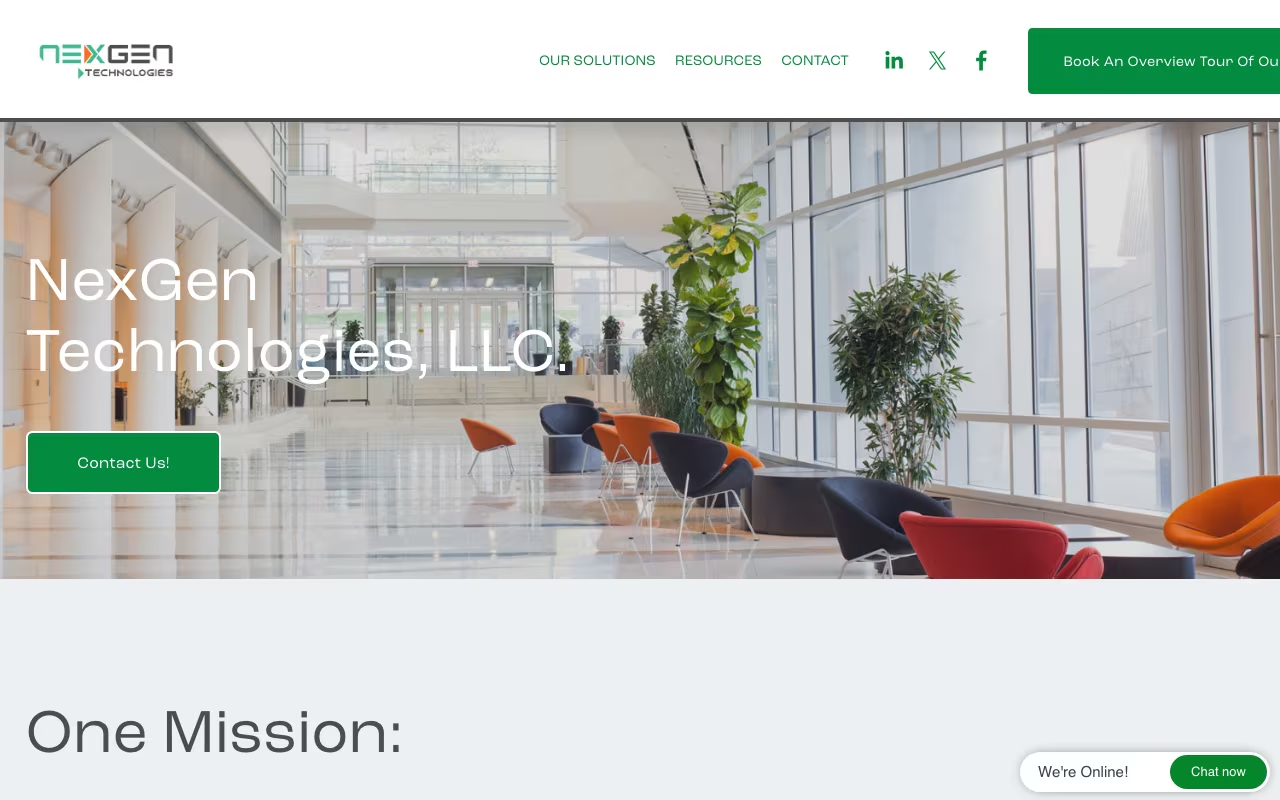
Distributed teams are now the default, but managing remote workforces involves infrastructure challenges most companies aren't equipped to handle internally. NexGen Technologies provides managed IT services and remote workforce solutions that help businesses operate distributed teams effectively—from technology setup to ongoing support.
The company serves organizations transitioning to remote or hybrid work, providing the technical foundation and operational support that makes distributed teams productive. Whether setting up remote infrastructure from scratch or optimizing existing distributed operations, NexGen Technologies handles the technical complexity.
For businesses where remote work is strategic but IT management isn't core competency, NexGen Technologies provides the expertise that enables distributed operations.
Enable Your Remote WorkforceKey Services
Remote Workforce Setup
Establish technology infrastructure for remote teams. Hardware provisioning, software deployment, communication tools, and security configuration. Get remote workers productive quickly.
Managed IT Support
Ongoing technical support for remote employees. Help desk services, troubleshooting, and problem resolution regardless of employee location.
Cloud Infrastructure
Cloud-based systems that enable remote access. File sharing, collaboration tools, and business applications accessible from anywhere.
Security Services
Remote work security: VPN, endpoint protection, access management, and security monitoring. Protect distributed assets and data.
Device Management
Manage company devices across locations. Software updates, security patches, and configuration management remotely.
Workforce Analytics
Tools for understanding remote workforce productivity and engagement. Data for optimizing distributed operations.
Enable Your Remote WorkforceService Models
Project-Based — Setup and transition services for specific initiatives.
Managed Services — Ongoing support and management on subscription basis.
Consulting — Strategy and planning for remote work implementations.
Pricing depends on scope, employee count, and service level. Contact for customized proposals.
Who Uses NexGen Technologies?
Technology Companies
Software development firms and tech startups rely on NexGen Technologies to build remote-first infrastructure. These companies often have distributed engineering teams across multiple time zones and need secure, reliable systems for code collaboration, communication, and project management. NexGen helps establish the technical backbone that keeps development teams productive regardless of location.
Professional Services Firms
Consulting agencies, accounting practices, and legal firms use NexGen Technologies to enable client-facing work from anywhere. These organizations need secure document sharing, video conferencing capabilities, and compliance-ready systems. NexGen provides the infrastructure that allows professionals to serve clients effectively while working remotely.
Healthcare Organizations
Medical practices and healthcare companies require HIPAA-compliant remote work solutions. NexGen Technologies helps healthcare organizations set up telemedicine capabilities, secure patient data access, and remote administrative functions while maintaining strict compliance standards.
Financial Services
Banks, investment firms, and insurance companies need highly secure remote infrastructure. NexGen Technologies provides the encrypted communications, secure access controls, and audit-ready systems that financial organizations require for distributed operations.
E-commerce and Retail
Online retailers and omnichannel businesses use NexGen Technologies to manage distributed customer service teams, remote marketing departments, and work-from-home operations. The platform helps these companies scale customer support without geographic limitations.
Pros and Cons
What We Like
Remote-work-focused expertise: Unlike general IT providers, NexGen Technologies specializes specifically in distributed workforce enablement. This focused approach means deeper knowledge of the unique challenges remote teams face.
End-to-end service from setup to support: The company handles everything from initial infrastructure design through ongoing management, providing a single point of accountability for remote work technology.
Security emphasis appropriate for distributed work: Remote work creates unique security vulnerabilities. NexGen Technologies builds security into every aspect of their solutions rather than treating it as an afterthought.
Flexible service models: Organizations can choose project-based engagement, ongoing managed services, or consulting depending on their needs and internal capabilities.
Scalable with team growth: Infrastructure designed to grow with your organization. Add remote employees without rebuilding systems from scratch.
What Could Be Better
Services require trust in external provider: Outsourcing IT management means giving significant access to an external company. Organizations with strict control requirements may find this challenging.
Pricing transparency limited: Custom proposals mean you won't know costs until after initial conversations. Budget-conscious organizations may prefer more upfront pricing information.
Smaller firm than major IT service providers: While specialization is an advantage, some organizations prefer the resources and stability of larger providers.
Geographic limitations possible: On-site services may be limited to certain regions. Fully remote support available everywhere, but some services may have geographic constraints.
NexGen vs. Alternatives
vs. Internal IT: Internal IT provides more control but requires headcount. NexGen provides capability without permanent staff.
vs. Large MSPs: Major managed service providers offer broader services. NexGen specializes in remote workforce specifically.
vs. DIY tools: Self-service tools are cheaper but require expertise. NexGen provides managed implementation.
Tips for Success
Document Your Current State
Before engaging NexGen Technologies, inventory your existing technology infrastructure. List all software applications, hardware devices, and current security measures. Understanding your starting point helps NexGen design solutions that build on existing investments rather than starting from scratch.
Define Clear Success Metrics
Establish measurable goals for your remote work transformation. Whether it's reducing IT support tickets, improving employee satisfaction with technology, or achieving specific uptime targets, clear metrics help evaluate the engagement's success and keep the project focused.
Involve Key Stakeholders Early
Remote work infrastructure affects every department. Include representatives from HR, finance, operations, and department managers in planning discussions. Their input ensures solutions address real business needs rather than just technical requirements.
Plan for Change Management
New technology is only effective if employees use it correctly. Budget time and resources for training and change management alongside technical implementation. NexGen Technologies can provide technical training, but organizational change management often requires internal leadership.
Start with a Pilot Group
Before rolling out new systems company-wide, test with a small group of users. This approach identifies issues before they affect the entire organization and builds internal champions who can help others adopt new tools.
Enable Your Remote WorkforceFAQ
How fast can we set up remote workers?
Timeline depends on scope and complexity. Simple setups for small teams can be completed in days. Complex enterprise transitions involving multiple systems, security requirements, and large employee populations typically take several weeks to a few months. NexGen Technologies provides realistic timelines during initial consultations based on your specific requirements.
Do you support existing infrastructure?
Yes. NexGen Technologies can work with existing tools and systems or recommend new ones depending on what best serves your organization. The goal is optimizing your remote work capability, not necessarily replacing everything you already have. Assessment services help identify what to keep, upgrade, or replace.
What about security compliance?
Security configurations can meet various compliance requirements including HIPAA, SOC 2, PCI-DSS, and GDPR. Discuss specific compliance needs during initial consultations to ensure solutions meet your regulatory obligations. NexGen Technologies has experience with multiple compliance frameworks.
Can you support employees in multiple countries?
Yes. Remote support services work globally, though some services may have geographic limitations for on-site requirements. International remote teams benefit from cloud-based infrastructure that works regardless of employee location. Data residency and regional compliance requirements are addressed during solution design.
What happens if something breaks outside business hours?
Service level agreements define support availability and response times. Many managed service arrangements include after-hours support for critical issues. Discuss your uptime requirements and support needs when defining service terms to ensure coverage matches your business operations.
Do you provide training for employees?
Technical training on new systems and tools is typically included in implementation projects. NexGen Technologies helps employees understand how to use remote work infrastructure effectively. Ongoing training for new hires can be included in managed service arrangements.
How do you handle offboarding when employees leave?
Secure offboarding processes ensure departing employees lose access to company systems and data immediately. Device recovery, account deactivation, and data protection procedures protect organizational assets. This is particularly important for remote workers who may have company devices at home.
Getting Started
Beginning your engagement with NexGen Technologies typically follows a structured approach designed to understand your needs before proposing solutions.
Initial Consultation: A discovery conversation explores your current remote work situation, challenges you're facing, and goals you want to achieve. This conversation is typically free and helps both parties determine if there's a good fit.
Assessment: For more complex engagements, NexGen Technologies may conduct a formal assessment of your existing infrastructure, security posture, and remote work capabilities. This assessment identifies gaps and opportunities for improvement.
Proposal: Based on discovery and assessment, NexGen Technologies provides a detailed proposal outlining recommended solutions, implementation approach, timeline, and pricing. Proposals are customized to your specific situation.
Implementation: Once engaged, project-based work follows a defined implementation plan. Managed services begin with onboarding processes that establish support procedures and access requirements.
Ongoing Relationship: For managed service clients, the relationship continues with regular reviews, proactive improvements, and responsive support. Project clients can engage again for future initiatives or transition to managed services.
Final Verdict
NexGen Technologies serves organizations that need remote work capability without building internal IT expertise. The focused approach on distributed workforce enablement provides value for companies where remote work matters but IT management doesn't.
For small to mid-sized businesses transitioning to remote or hybrid work, NexGen Technologies offers a practical path to professional-grade infrastructure without the overhead of building an internal IT team. Larger organizations may use NexGen Technologies to supplement internal capabilities for remote-specific challenges.
The key consideration is whether specialized remote work expertise justifies engaging an external provider versus handling IT needs internally or through a general managed service provider. For organizations where distributed work is central to operations, NexGen Technologies' focused approach often provides better outcomes than generalist alternatives.
Rating: 4.0/5